
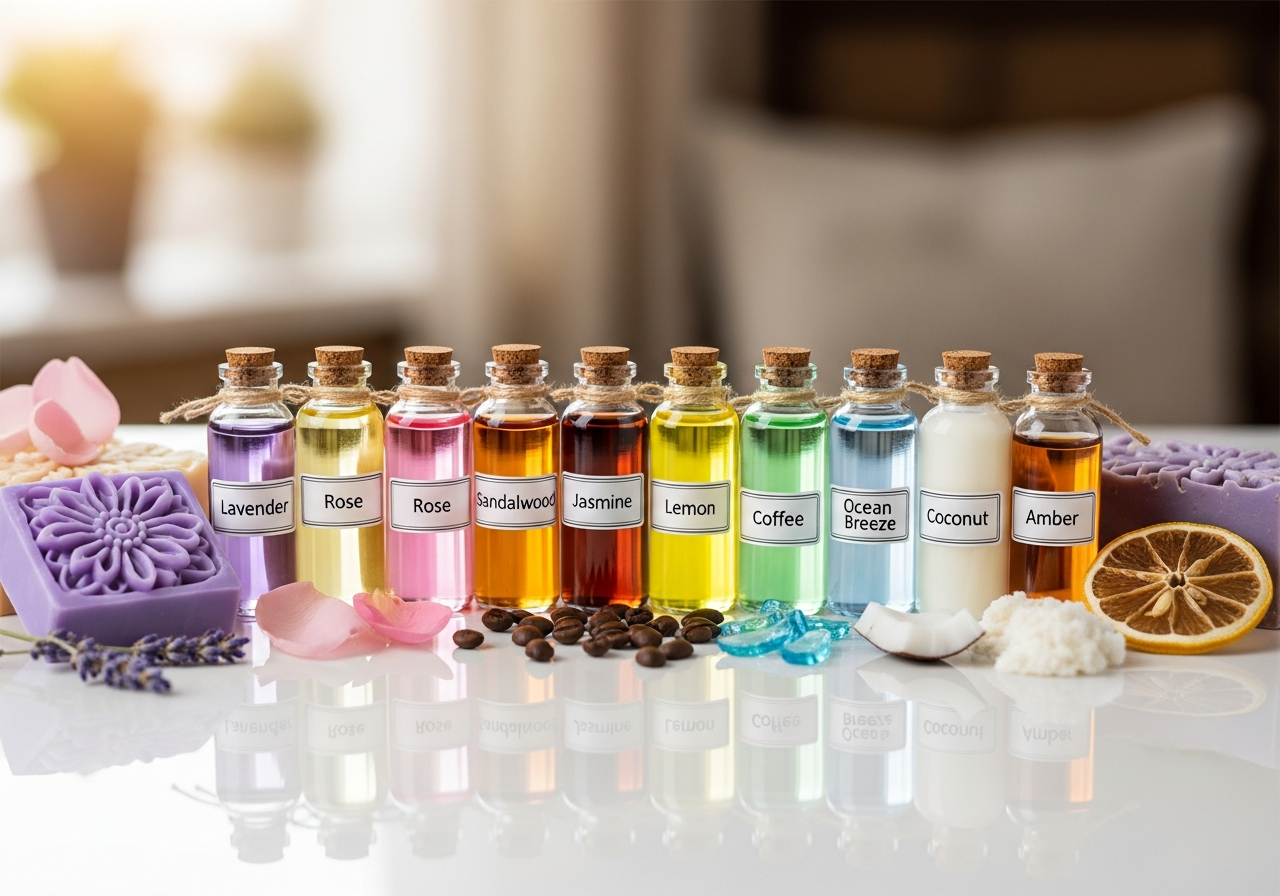
Creating handmade soaps is a rewarding craft that combines creativity with science. The fragrance you choose can transform a simple bar of soap into an exceptional sensory experience that keeps customers coming back.
For beginners stepping into soap making, selecting the best fragrance oil for soap making is one of the most important decisions you’ll make. The right scent not only enhances the aesthetic appeal of your product but also determines whether your soap becomes a beloved staple or a forgotten purchase.
In this guide, we will explore the top fragrance oils ideal for soap-making beginners, helping you understand both which scents work best and how much fragrance oil to add to soap for optimal results.
Demystifying Fragrance Oils In Soap Making
Before diving into specific recommendations, it’s essential to understand how fragrance oils behave in soap. Fragrance oils are concentrated blends of aroma chemicals and natural isolates, engineered to deliver consistent scent performance across various applications.
Unlike essential oils, which can fade significantly during the saponification process, quality fragrance oils maintain their strength and longevity throughout the soap’s shelf life. This reliability makes them particularly suitable for beginners who are still perfecting their craft.
The best fragrance oils for soap making are specifically formulated to withstand the alkaline environment created during cold process soap production. They’re also designed to cure effectively in melt-and-pour bases, ensuring that your finished soaps smell beautiful from day one through months of use.
Top 10 Best Fragrance Oils for Soap Making
Selecting among the best fragrance oils for soap making requires understanding not only scent profile but also performance characteristics. The following ten options represent tried-and-tested choices that consistently deliver excellent results for both beginners and experienced soapmakers.
1. Lavender Fragrance Oil
Lavender stands as the most versatile fragrance oil for soap making, beloved for its calming aroma and universal appeal. This classic floral scent blends seamlessly into almost any soap design, working equally well in traditional bars or artisanal creations.
Lavender fragrance oil offers genuine staying power throughout the curing process and beyond, delivering a comforting scent that evolves beautifully as the soap ages. Its soothing properties align naturally with soap’s cleansing function, making it an excellent choice for spa-style or wellness-focused formulations.
Beginners appreciate lavender because it’s forgiving during production and rarely causes acceleration or discolouration issues common with more temperamental fragrances.
2. Vanilla Fragrance Oil
Warm, inviting vanilla fragrance oil creates universally appealing soaps that appeal to gift-givers and personal users alike. The creamy sweetness of vanilla pairs beautifully with complementary fragrances like lavender, sandalwood, or even citrus notes, offering endless creative blending opportunities.
Vanilla fragrance oil remains stable throughout cold process saponification and contributes to a rich, luxurious feel.
For beginners exploring fragrance blending, vanilla serves as an excellent base note that anchors more delicate top notes. Its versatility extends to both masculine and feminine soap designs, making it invaluable for diversifying product lines.
3. Rose Fragrance Oil
Rose fragrance oil delivers romantic elegance that commands premium positioning in any soap collection. The floral sophistication of roses creates soaps that feel luxurious and special, perfect for gifting or indulgent personal care. Quality rose fragrance oil maintains remarkable depth throughout curing, with the scent becoming more refined as the soap ages.
The fragrance works particularly well in ombré designs and swirled creations where visual beauty complements aromatic excellence.
Beginners should note that Rose performs excellently at standard usage rates and rarely causes acceleration, making it a reliable choice for experimenting with design techniques.
4. Sandalwood Fragrance Oil
Sandalwood fragrance oil offers warmth and sophistication, creating soaps with depth and character. This woody scent appeals particularly to those seeking masculine grooming products or premium artisanal bars.
The rich, earthy profile of sandalwood provides remarkable longevity, with the scent strengthening slightly during the curing process. This fragrance works beautifully in combination with citrus oils, creating balanced compositions that feel both modern and timeless.
For beginners exploring how much fragrance oil to add to soap, sandalwood typically performs well at standard 0.7 ounces per pound rates.
5. Jasmine Fragrance Oil
Jasmine fragrance oil captures romantic floral elegance whilst maintaining a light, airy quality that prevents soapiness from feeling heavy. The delicate, feminine profile appeals across demographic boundaries, creating soaps that feel both sophisticated and accessible.
Jasmine performs exceptionally well in cold process soap, resisting the fading that sometimes affects other floral fragrances. The scent pairs beautifully with vanilla, sandalwood, or other warm base notes, encouraging creative experimentation.
6. Lemon Fragrance Oil
Fresh, citrusy lemon fragrance oil brings sunshine and vitality to soap collections, particularly appealing for summer launches and energising morning bars. The clean, uplifting profile of lemon creates a transparency that soaps beautifully, adding visual clarity to complement aromatic freshness.
Lemon fragrance oil works wonderfully in combination with lavender or other herbaceous notes, creating sophisticated blends that feel both playful and refined. The fragrance remains vibrant throughout curing without fading significantly, ensuring that finished bars deliver the promised zesty scent experience.
7. Coffee Fragrance Oil
Coffee fragrance oil creates distinctive, energising soaps that appeal to morning-ritual enthusiasts and those seeking exfoliating experiences. The rich, roasted profile feels sophisticated whilst remaining approachable, creating market differentiation without sacrificing mass appeal.
Coffee fragrance oil pairs exceptionally well with vanilla or chocolate fragrances, creating gourmet-inspired blends. The scent performs reliably in cold process soap, maintaining depth throughout the curing timeline. When combined with actual coffee grounds for exfoliation, coffee fragrance oil creates multi-sensory soap experiences that justify premium pricing.
8. Ocean Breeze Fragrance Oil
Ocean breeze fragrance oil delivers a refreshing, aquatic appeal that captures seaside freshness. This unisex fragrance works beautifully in spa-inspired collections and appeals to those seeking alternatives to traditional floral or herbal profiles.
The crisp, invigorating scent remains stable throughout saponification, delivering the promised ocean-like freshness in finished bars. Ocean breeze pairs excellently with citrus or herbal notes, creating complex aromatic profiles that prevent the soap from feeling one-dimensional.
9. Coconut Fragrance Oil
Coconut fragrance oil brings tropical warmth and creamy sweetness to soap formulations, particularly appealing for summer product lines and exotic blends. The warm profile pairs beautifully with vanilla, jasmine, or other complementary fragrances, enabling creative tropical compositions.
Coconut fragrance oil performs consistently in both cold process and melt-and-pour applications. The scent creates an indulgent, resort-like feeling that justifies premium positioning.
10. Amber Fragrance Oil
Amber fragrance oil creates warm, sophisticated soaps with depth and mystery. This warm, sensual base note performs beautifully when combined with florals or spices, creating complex aromatic profiles that feel premium and refined.
Amber fragrance oil remains stable and actually improves during curing, with the scent deepening and becoming more nuanced over time. The fragrance creates exceptional longevity in finished bars, with customers enjoying extended scent performance.
For beginners exploring premium fragrance combinations, amber serves as an excellent anchor note that elevates entire formulations.
How Much Fragrance Oil to Add to Soap?
One of the most frequently asked questions in soap making is determining the correct fragrance load. The answer depends on the soap type you’re creating and the specific fragrance oil’s performance profile.
For cold process soap, the standard usage rate is approximately 0.7 ounces of fragrance oil per pound of total soap batch. This calculation includes all ingredients—oils, lye, and water. Many experienced soapmakers prefer calculating based on their soap base oil weight rather than total batch weight, using a range of 0.5 to 1 ounce per pound of oils, which typically equates to 3-6% fragrance concentration.
For melt-and-pour soaps, the rate is lower at approximately 0.5 ounces per pound, since these pre-formulated bases don’t undergo saponification that can consume some fragrance molecules. Rebatch soap falls in between at 0.6 ounces per pound.
The key to understanding how much fragrance oil to add to soap is recognising that these are guidelines rather than absolute rules. Personal preference plays a significant role; some soapmakers prefer lighter, more subtle scents, whilst others favour bold, pronounced fragrances.
Experimenting with different percentages within the recommended range helps you discover your ideal scent intensity. Most importantly, always verify that your chosen fragrance oil is approved for use at your intended percentage, as certain fragrances have lower maximum safe usage rates.
Fragrance Oil Selection Guidelines For Beginners
Choosing the best fragrance oil for soap making goes beyond personal scent preference. Consider these critical factors to ensure successful soap production:
Stability And Performance
- Check fragrance behaviour during saponification; some fade whilst others intensify
- Verify stability throughout the curing process (4-6 weeks for cold process)
- Test small batches before committing to large production runs
- Review supplier technical data sheets for acceleration or ricing warnings
- Always refer to a professional fragrance oil mixing chart for the blending ratio
Target Market Alignment
- Luxury wellness brands: Herbaceous and floral (lavender, jasmine, rose)
- Everyday soap lines: Fruity and gourmand profiles (vanilla, coconut, coffee)
- Personal use: Greater creative freedom for experimental blends
- Unisex appeal: Ocean breeze, lemon, sandalwood combinations
Quality Over Budget
- Premium fragrance oils maintain colour consistency
- Resist technical issues like acceleration and separation
- Deliver consistent scent intensity across batches
- Invest in reputable suppliers with IFRA compliance documentation
Creating Fragrance Blends: Beyond Single Notes
Once you’re comfortable using single fragrance oils, you can start blending them to build a recognisable “house scent” and stronger brand identity. Using the fragrance pyramid helps you structure those blends so they smell balanced and last well in soap.
- Use base notes (woody, resinous, musky) for longevity.
- Add heart notes (floral, spicy, fruity) for character.
- Finish with top notes (citrus, herbal) for first impression.
A simple starting ratio for soap is:
- 50% base notes (e.g. sandalwood, amber)
- 30% heart notes (e.g. rose, jasmine)
- 20% top notes (e.g. lemon, lavender)
Always test new blends in small batches first to check performance in your chosen soap method before scaling to full production.
Conclusion
The best fragrance oil for soap making represents more than simply a pleasant aroma—it reflects your commitment to quality, your understanding of customer preferences, and your willingness to invest in materials that truly elevate handmade creations.
Whether you’re creating lavender soaps for relaxation, vanilla blends for universal appeal, or sophisticated sandalwood compositions for premium positioning, selecting appropriate fragrances sets the foundation for success. Understanding how much fragrance oil to add to soap ensures consistency and reliability across batches. By exploring the ten recommended fragrance oils for soap making and experimenting confidently with combinations and techniques, beginners develop the expertise needed to create exceptional handmade products that customers love.
Frequently Asked Questions
What is the best fragrance oil for soap making?
The best fragrance oil for soap making depends on your target market and intended use. Lavender is universally popular for its versatility and stability, whilst vanilla appeals to mass markets. For premium positioning, rose or sandalwood creates sophisticated profiles.
How much fragrance oil should I add to my soap batch?
The standard usage rate is approximately 0.7 ounces of fragrance oil per pound of total soap batch for cold process soap. Melt-and-pour requires 0.5 ounces per pound. Some soapmakers calculate based on base oil weight (0.5-1 ounce per pound), which equates to 3-6% fragrance concentration. Always verify your specific fragrance’s maximum safe usage rate before production.
Do fragrance oils fade during the soap-curing process?
Quality fragrance oils formulated for soap making remain stable or improve throughout curing. Unlike essential oils, which fade significantly, professional fragrance oils maintain scent intensity. Some fragrances, like amber, actually deepen over time. Poor-quality budget fragrances may fade, highlighting the importance of investing in reputable suppliers.
What are the best fragrance oils for soap making if I want unisex appeal?
Ocean breeze, lemon, lavender, and coconut fragrances offer a strong unisex appeal without gender-specific associations. These scents work across diverse customer demographics and create market flexibility. Combining traditionally feminine fragrances like rose with masculine notes like sandalwood creates balanced profiles that transcend gendered expectations.
Can I blend multiple fragrance oils in one soap batch?
Yes, blending fragrance oils creates signature scents and encourages creative differentiation. Use the fragrance pyramid structure—approximately 50% base notes, 30% heart notes, and 20% top notes to create balanced blends. Test small batches before full production runs, ensuring your creative vision translates successfully into finished products.