
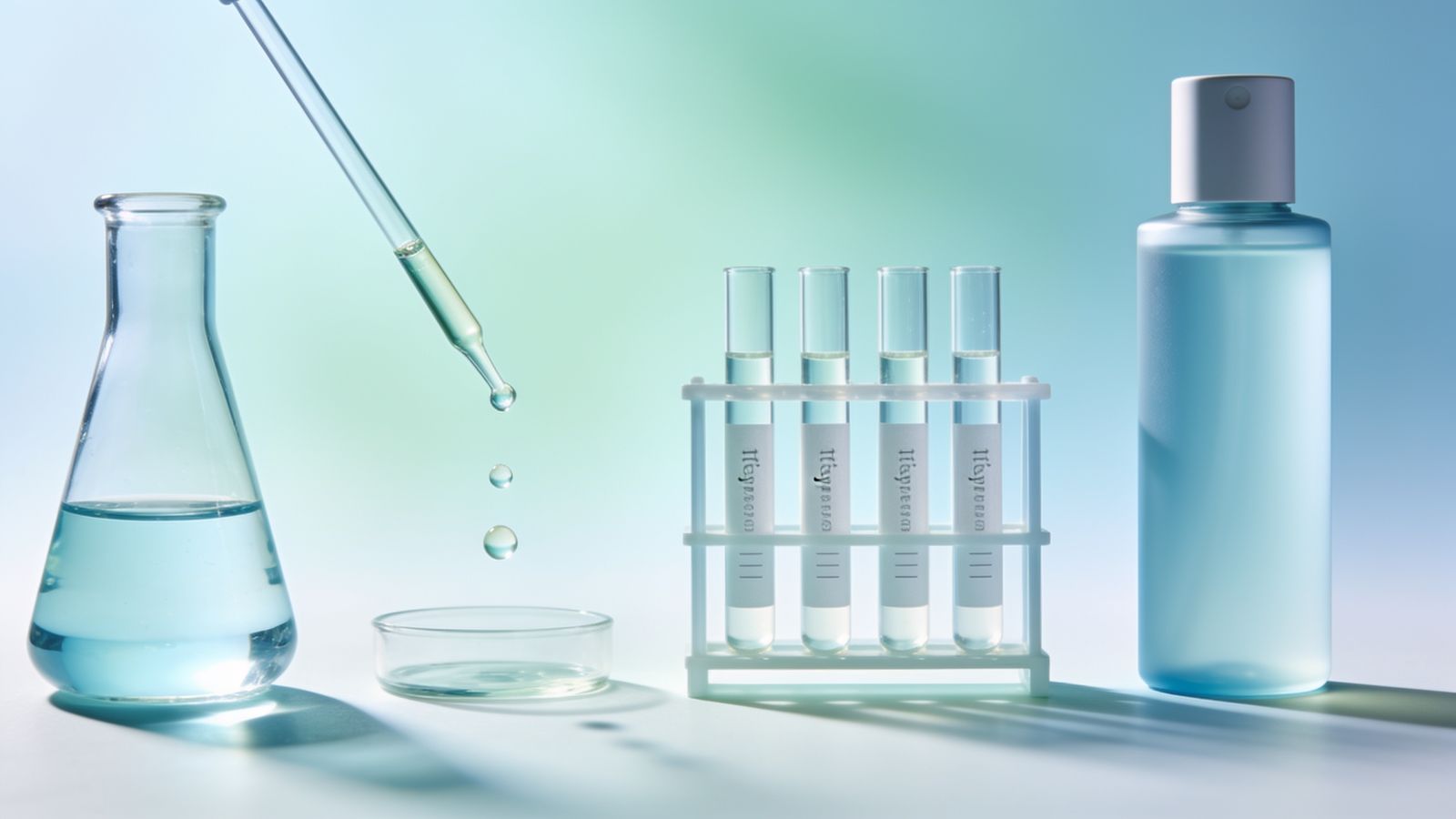
Body mists have become a staple in personal care routines worldwide, offering a lighter, more versatile alternative to traditional perfumes. Whether you’re a brand looking to launch a new line or a formulator refining your craft, understanding body mist formulation is essential. In this guide, we’ll walk through the core ingredients, proven base formulas, fragrance load calculations, and manufacturing steps that turn a simple idea into a market-ready product. We’ve drawn on industry best practices and Luxeolabs’ personal care fragrance expertise to cover what matters most: clarity, stability, scent performance, and regulatory confidence.
What Is Body Mist Formulation?
Body mist formulation refers to the process of creating a light, water-based fragrance product with a fragrance load typically between 1–5%. This sits well below the 15–30% concentration found in perfumes or the 2–5% in colognes. The result is a refreshing, everyday spray that can be applied liberally without overwhelming the senses.
Body mists serve multiple use cases: post-shower freshness, gym bag essentials, travel-friendly fragrance, or layering with heavier perfumes. According to Allied Market Research, the global body mist market was valued at $7.8 billion in 2023 and is projected to reach $14 billion by 2035, driven by demand for affordable, customisable scents and clean-ingredient formulations.
It’s worth distinguishing body mist from body spray. Body sprays often include deodorising agents and are positioned for odour control, while body mists focus purely on fragrance. For brands developing new lines, Luxeolabs’ tailored fragrance solutions offer custom scent profiles backed by ISO 9001, GMP, and IFRA compliance.
| Product Type | Fragrance Load (%) | Base | Longevity | Use Case |
| Body Mist | 1–5 | Water + solubiliser | 1–3 hours | Daily refresh, layering |
| Body Spray | 2–5 | Water/alcohol + deodorant | 2–4 hours | Odour control, active use |
| Perfume | 15–30 | Alcohol | 6–12 hours | Special occasions, signature scent |
Core Ingredients for Body Mist Manufacturing
Every body mist formula starts with a handful of essential components. Here are ten key ingredients and their roles:
- Distilled water (95–98% of the base) , The primary solvent, free from minerals that could cloud the formula.
- High-proof alcohol (optional) , Adds a perfume-like quality, speeds drying, and enhances scent throw. Common in alcohol-based mists.
- Witch hazel (10–15%) , A natural preservative and astringent, popular in botanical formulations.
- Aloe vera juice (5–10%) , Moisturises skin and adds a soothing element, ideal for sensitive-skin positioning.
- Vegetable glycerin (5–10 drops per 4 oz) , A humectant that helps fragrance cling to skin without stickiness.
- Solubilisers , Polysorbate 20, polysorbate 80, PEG-40 hydrogenated castor oil, or caprylyl/capryl glucoside. These allow oil-based fragrances to disperse evenly in water.
- Essential oils or fragrance oils (1–5% total) , The scent itself. Essential oils offer natural aromatherapy benefits; fragrance oils provide consistency and longevity.
- Natural preservatives , Vitamin E, rosemary extract, or leucidal liquid (fermented radish root) extend shelf life in water-based formulas.
- pH adjusters , Citric acid or similar, used to stabilise the formula and prevent microbial growth.
- Carrier oils , Jojoba or fractionated coconut oil, sometimes added in small amounts for oil-based mists or to soften the spray.
For brands sourcing high-quality fragrance oils, Luxeolabs’ advanced formulations offer a library of scents engineered for personal care applications, with full IFRA documentation and skin-safe dilution guidance.
| Solubiliser | Best For | Ratio (Solubiliser:Fragrance) | Clarity | Skin Feel |
| Polysorbate 20 | Light fragrances, essential oils | 1:1 to 2:1 | Clear | Non-greasy |
| Polysorbate 80 | Heavier oils, thicker blends | 2:1 to 3:1 | Clear to slightly opalescent | Smooth |
| PEG-40 Hydrogenated Castor Oil | Natural formulations, cold process | 3:1 to 4:1 | Clear | Slightly tacky |
| Caprylyl/Capryl Glucoside | Clean beauty, sensitive skin | 4:1 to 5:1 | Semi-clear | Very light |
Body Mist Base Formulas
Three proven base formulas cover most use cases. Each has distinct characteristics and trade-offs.
Alcohol-Based Mist
This formula uses 95% high-proof alcohol as the base, with 5% fragrance. It dries quickly, delivers strong scent throw, and suits active lifestyle sprays. The alcohol acts as both solvent and preservative, eliminating the need for additional preservatives. However, it can be drying on sensitive skin and may not appeal to consumers seeking alcohol-free options.
Witch Hazel-Based Mist
A 50/50 blend of distilled water and witch hazel, with 3–6% fragrance, creates a botanical story ideal for spa lines. Witch hazel provides mild preservation and a natural astringent quality. This formula works well for brands emphasising plant-based ingredients, though it may require additional preservatives for extended shelf life.
Alcohol-Free Water-Based Mist
This formula uses 95% distilled water, 1 teaspoon of solubiliser, and 2% fragrance. It’s gentle, suitable for sensitive skin, and positions well for family-friendly or clean-beauty lines. The trade-off is shorter shelf life (3–6 months) and the need for careful preservation. For brands requiring regulatory confidence, Luxeolabs’ ISO 9001, GMP & IFRA compliance ensures formulations meet global safety standards.
| Base Type | Pros | Cons | Ideal For | Shelf Life |
| Alcohol-Based | Fast-drying, strong throw, self-preserving | Can dry skin, alcohol scent | Active, travel, unisex | 12–18 months |
| Witch Hazel-Based | Botanical appeal, mild preservation | May need extra preservative | Spa, natural beauty | 6–12 months |
| Alcohol-Free Water-Based | Gentle, family-friendly, customisable | Shorter shelf life, needs preservative | Sensitive skin, clean beauty | 3–6 months |
Fragrance Load and Dilution Ratios
Fragrance load is the percentage of fragrance oil or essential oil in the total formula. For body mists, 1–2% creates a light, everyday scent; 3–5% delivers a stronger body spray; and up to 10% approaches perfume mist territory. The key is balancing scent strength with skin safety and formula stability.
Dilution ratios depend on the solubiliser used. A 1:1 solubiliser-to-fragrance ratio works for 0.5–1% fragrance loads, producing a clear mist. For 1–3% loads, increase to 2:1 or 3:1. At 3–5%, a 4:1 or 5:1 ratio maintains semi-clear stability. Above 5%, you’ll need nanoemulsion technology or an alcohol blend to prevent separation.
IFRA guidelines set maximum safe concentrations for skin-applied fragrances. Most body mist formulations fall well within these limits, but it’s essential to check allergen thresholds and photosensitivity warnings, especially for citrus oils. Luxeolabs’ tailored fragrance solutions include full IFRA documentation, making compliance straightforward for brands.
| Use Case | Dilution (%) | Total Drops (Approx. per 4 oz) | Expected Clarity |
| Light Daily Mist | 0.5–1 | 10–20 | Clear |
| Stronger Body Spray | 1–3 | 20–60 | Clear to slightly opalescent |
| Alcohol-Based Fragrance Mist | 3–5 | 60–100 | Clear |
| Water-Based Mist with Solubiliser | 2–4 | 40–80 | Semi-clear, stable |
| Perfume Mist | 5–10 | 100–200 | Clear (alcohol or nanoemulsion) |
Step-by-Step Body Mist Manufacturing Process
Manufacturing a body mist involves seven stages, from bench-scale trials to bottling.
Stage 1: Ingredient Prep
Weigh all ingredients using a digital scale. Don’t eyeball measurements , precision matters for consistency. Label each trial batch with date, formula number, and fragrance name. Use clean glass beakers and stir rods to avoid contamination.
Stage 2: Pre-Blend Fragrance and Solubiliser
In a small beaker, combine your fragrance oil with the solubiliser at the chosen ratio (e.g., 2:1 for a 2% mist). Stir gently until the mixture is uniform. This premix prevents the fragrance from floating on top of the water base.
Stage 3: Add to Base
Slowly pour the premix into your distilled water or witch hazel base. Stir continuously but gently to avoid introducing air bubbles. If using aloe vera juice or glycerin, add them at this stage.
Stage 4: pH Adjustment
Test the pH with strips. For water-based mists, aim for 5.0–6.0 to match skin’s natural pH and inhibit microbial growth. Add a few drops of citric acid if needed, then retest.
Stage 5: Add Preservatives
If your formula is water-based and alcohol-free, add a natural preservative like vitamin E or rosemary extract. Follow the supplier’s recommended usage rate (typically 0.5–1%).
Stage 6: Bottle and Label
Transfer the mist to a 4 oz amber glass or PET bottle. Leave a small air space at the top. Attach a fine-mist spray nozzle. Label with product name, ingredients, batch date, and any required warnings (e.g., For external use only).
Stage 7: Rest and Test
Let the mist sit for 24–48 hours. Check for clarity, separation, and scent. Test the spray pattern , it should produce a fine, even mist, not heavy droplets. If you notice cloudiness, increase the solubiliser ratio in your next batch.
For brands scaling beyond bench trials, Luxeolabs’ rapid development and production infrastructure offers high-efficiency filling lines, automated batching, and climate-controlled environments. Tailored samples can be delivered in three business days, with final products ready in seven.
Essential Oil vs Fragrance Oil in Body Mists
Choosing between essential oils and fragrance oils affects performance, safety, and cost.
Essential oils are natural extracts with aromatherapy benefits. They’re volatile, meaning they evaporate quickly, which can shorten scent longevity. Citrus oils (lemon, bergamot, grapefruit) carry photosensitivity risks , they can cause skin reactions when exposed to sunlight. Essential oils also cost more and require careful dilution to avoid irritation.
Fragrance oils are synthetic or semi-synthetic blends designed for consistency. They last longer on skin, cost less, and don’t carry photosensitivity warnings. However, they can’t make therapeutic claims and may not appeal to consumers seeking all-natural products.
Both require solubilisers in water-based mists. Essential oils may need higher solubiliser ratios due to their complex molecular structures. Fragrance oils often blend more easily, especially when formulated specifically for personal care. Luxeolabs’ extensive library of fragrance oils includes options engineered for water-based applications, with full IFRA compliance and skin-safe dilution data.
| Aspect | Essential Oil | Fragrance Oil |
| Solubility | Requires higher solubiliser ratios | Blends more easily |
| Longevity | 1–2 hours (volatile) | 2–4 hours (stable) |
| Skin Safety | Photosensitivity risk (citrus), irritation at high % | Generally safe at recommended dilutions |
| Cost | Higher (£10–£50 per 10 ml) | Lower (£3–£15 per 10 ml) |
| Best For | Aromatherapy, natural positioning | Consistent scent, mass market |
Scent Blending for Body Mists
A well-structured scent uses the perfume pyramid: top, middle, and base notes.
Top notes (citrus, herbs, light florals) evaporate in 15–30 minutes and make up about 30% of the blend. They create the first impression.
Middle notes (florals, spices, fruits) last 2–4 hours and form 50% of the blend. They define the character of the mist.
Base notes (woods, resins, musks) linger for 4+ hours and account for 20% of the blend. They anchor the scent and slow evaporation.
A classic ratio for a 30-drop blend might be 9 drops citrus (top), 15 drops florals or herbs (middle), and 6 drops woods (base). Fixatives like benzoin, labdanum, or synthetic musks (e.g., ethylene brassylate) further extend longevity by trapping lighter molecules.
Maceration , letting the blended fragrance sit for two weeks to three months , smooths out sharp edges and deepens the scent. For bespoke scent design, Luxeolabs’ in-house perfumers , Flora Gourdon, Ankush Chinchane, and Sara Chabokrow , bring decades of expertise to custom formulations.
| Note Family | Examples | Duration | % of Blend |
| Top | Citrus (lemon, bergamot), herbs (basil, mint) | 15–30 min | 30% |
| Middle | Florals (rose, jasmine), spices (cinnamon, cardamom) | 2–4 hours | 50% |
| Base | Woods (sandalwood, cedarwood), resins (benzoin, myrrh) | 4+ hours | 20% |
Packaging and Stability Testing
Packaging choices affect shelf life, user experience, and brand perception.
Glass bottles (amber or cobalt, 4 oz) offer UV protection and a premium feel. They’re heavier and more fragile but ideal for natural or luxury lines.
PET plastic bottles are lightweight, travel-friendly, and cost-effective. They suit mass-market or active-lifestyle positioning but offer less UV protection.
Spray nozzles matter. A fine-mist nozzle creates an even, light spray; a heavy-droplet nozzle feels more like a splash. Clogging can occur if oils are too thick or if sediment forms. Strain the formula before bottling and clean spray tops regularly.
Shelf life varies by formula. Water-based mists without preservatives last 3–6 months. With preservatives, expect 6–12 months. Refrigeration extends longevity. Stability testing checks appearance (cloudiness, sediment), odour, spray pattern, and leakage. Temperature cycling (storing at 4°C, then 40°C, then back) simulates real-world conditions.
Luxeolabs’ advanced stability testing ensures fragrance longevity and quality, with protocols that meet ISO 9001 and GMP standards.
| Packaging Type | Pros | Cons | Best For | Cost (per unit) |
| Glass (amber/cobalt) | UV protection, premium feel, reusable | Heavy, fragile, higher cost | Natural, luxury, spa lines | £1.50–£3.00 |
| PET Plastic | Lightweight, travel-friendly, lower cost | Less UV protection, less premium | Mass market, active lifestyle | £0.30–£0.80 |
Troubleshooting Common Body Mist Issues
Four problems crop up frequently in body mist formulation.
Cloudiness or Separation
This usually means insufficient solubiliser or incompatible oils. Increase the solubiliser-to-fragrance ratio (try 3:1 or 4:1). Shake the bottle before each use, or add polysorbate 20 to improve clarity.
Weak Scent Throw
If the mist smells faint, you may have too low a fragrance load or too many volatile top notes. Add more base notes (woods, resins) to anchor the scent. Increase the fragrance percentage slightly, or apply the mist to pulse points (wrists, neck) where body heat amplifies scent.
Clogged Nozzle
Thick oils or sediment can block the spray mechanism. Strain the formula through a fine mesh or coffee filter before bottling. Clean the spray top with warm water and a pin if clogging occurs. Use lighter oils (fractionated coconut oil instead of jojoba) if the problem persists.
Skin Irritation
High essential oil concentrations or photosensitive oils (citrus) can cause reactions. Always patch-test new formulas on the inner wrist. Reduce dilution to 1–2% if irritation occurs. Avoid citrus oils before sun exposure, or use them at very low percentages.
For formulation guidance, Luxeolabs’ skin-safe, dermatologically tested scents are engineered for sensitive applications.
Preservation and Shelf Life for Water-Based Body Mists
Water-based mists are vulnerable to microbial growth. Bacteria, yeast, and mould thrive in water, especially when the formula contains botanical extracts like aloe vera.
Natural preservatives include:
- Vitamin E (tocopherol) , An antioxidant that prevents rancidity but offers limited antimicrobial protection.
- Rosemary extract , Antimicrobial and antioxidant, effective at 0.5–1%.
- Leucidal liquid (fermented radish root) , A broad-spectrum preservative suitable for clean-beauty formulations, used at 2–4%.
Storage practices matter. Keep mists in a cool, dark place , not the bathroom, where heat and humidity accelerate degradation. Dark glass bottles block UV light, which can break down fragrance molecules. Refrigeration extends shelf life, especially for alcohol-free formulas.
Signs to replace a mist: off smell (sour or musty), cloudiness, colour change, or a spray mechanism that fails. For brands committed to sustainability, Luxeolabs’ eco-friendly practices include sustainable sourcing and zero-waste initiatives.
Regulatory Compliance and Labeling for Body Mist Products
Body mists are cosmetics, subject to regional regulations.
IFRA standards set maximum safe concentrations for fragrance ingredients. Most body mists fall well within these limits, but formulators must check allergen thresholds. The EU Cosmetics Regulation requires labeling of 26 allergens if present above 0.001% in leave-on products.
Market-specific requirements vary:
- UAE: ISO 9001 and GMP compliance for manufacturing; IFRA documentation for fragrance safety.
- UK: SCCS (Scientific Committee on Consumer Safety) opinions guide ingredient use; full ingredient disclosure on labels.
- US: FDA cosmetic labeling rules require ingredient lists in descending order of predominance.
Luxeolabs’ ISO 9001, GMP & IFRA compliance provides regulatory confidence for brands entering multiple markets.
| Standard | Scope | Key Requirement | Relevance to Body Mist |
| IFRA | Fragrance safety | Max concentrations, allergen disclosure | Ensures skin-safe dilution |
| EU Cosmetics Regulation | Ingredient safety, labeling | 26 allergen disclosure if >0.001% | Mandatory for EU sales |
| ISO 9001 / GMP | Manufacturing quality | Process control, documentation | Ensures consistent, safe production |
Scaling from DIY to Commercial Production
Moving from small-batch trials to commercial scale involves new considerations.
MOQ (minimum order quantity) applies to fragrance oils, bottles, and contract manufacturing. Fragrance suppliers may require 1–5 kg orders; bottle suppliers often start at 500–1,000 units. Contract manufacturers typically have MOQs of 500–5,000 units per SKU.
Sampling process: Submit a fragrance brief (target scent profile, use case, budget). The supplier provides samples for sensory approval. Once approved, stability testing and final specification follow. This can take 2–6 weeks.
OEM/ODM services handle custom formulation, packaging coordination, and regulatory documentation. OEM (original equipment manufacturer) means you provide the formula; ODM (original design manufacturer) means the supplier develops it. Both streamline the path to market.
Luxeolabs’ flexible MOQs cater to startups and established brands alike, with capacity to scale up to three tons per day. Tailored samples arrive in three business days; final products ship in seven. For brands seeking custom scent profiles, Luxeolabs’ global R&D hubs in Sharjah, Grasse, and Mumbai offer end-to-end support.
Conclusion
Body mist formulation balances art and science , from choosing the right solubiliser ratio to engineering scent longevity with fixatives. Whether you’re crafting a DIY recipe or scaling to commercial production, the principles remain the same: clarity, stability, skin safety, and scent performance. For brands ready to launch or refine their body mist lines, Luxeolabs’ personal care fragrance solutions offer the technical expertise, regulatory confidence, and rapid turnaround needed to bring ideas to market.
FAQ
What’s the ideal fragrance load for a body mist?
For a light, everyday mist, 1–2% fragrance load works well. If you want a stronger body spray, aim for 3–5%. Above 5%, you’re entering perfume mist territory and may need an alcohol base or nanoemulsion technology to maintain clarity.
Can I use essential oils instead of fragrance oils in a body mist?
Yes, but essential oils require higher solubiliser ratios and carry photosensitivity risks (especially citrus oils). They also evaporate faster, shortening scent longevity. Fragrance oils offer more consistency and longer wear, making them popular for commercial formulations. Luxeolabs’ fragrance oil library includes options engineered for personal care.
How long does a water-based body mist last?
Without preservatives, 3–6 months. With natural preservatives (vitamin E, rosemary extract), 6–12 months. Refrigeration extends shelf life. Always check for off smells, cloudiness, or colour changes before use.
What solubiliser works best for body mists?
Polysorbate 20 is ideal for light fragrances and essential oils, used at 1:1 to 2:1 ratios. For heavier oils, polysorbate 80 at 2:1 to 3:1 works better. Clean-beauty brands often prefer caprylyl/capryl glucoside at 4:1 to 5:1 for a very light skin feel.
Do I need IFRA compliance for a body mist?
If you’re selling commercially, yes. IFRA standards ensure fragrance ingredients are used at skin-safe concentrations. The EU also requires allergen disclosure if any of 26 listed allergens exceed 0.001% in leave-on products. Luxeolabs’ IFRA-compliant formulations simplify regulatory approval for brands entering multiple markets.