
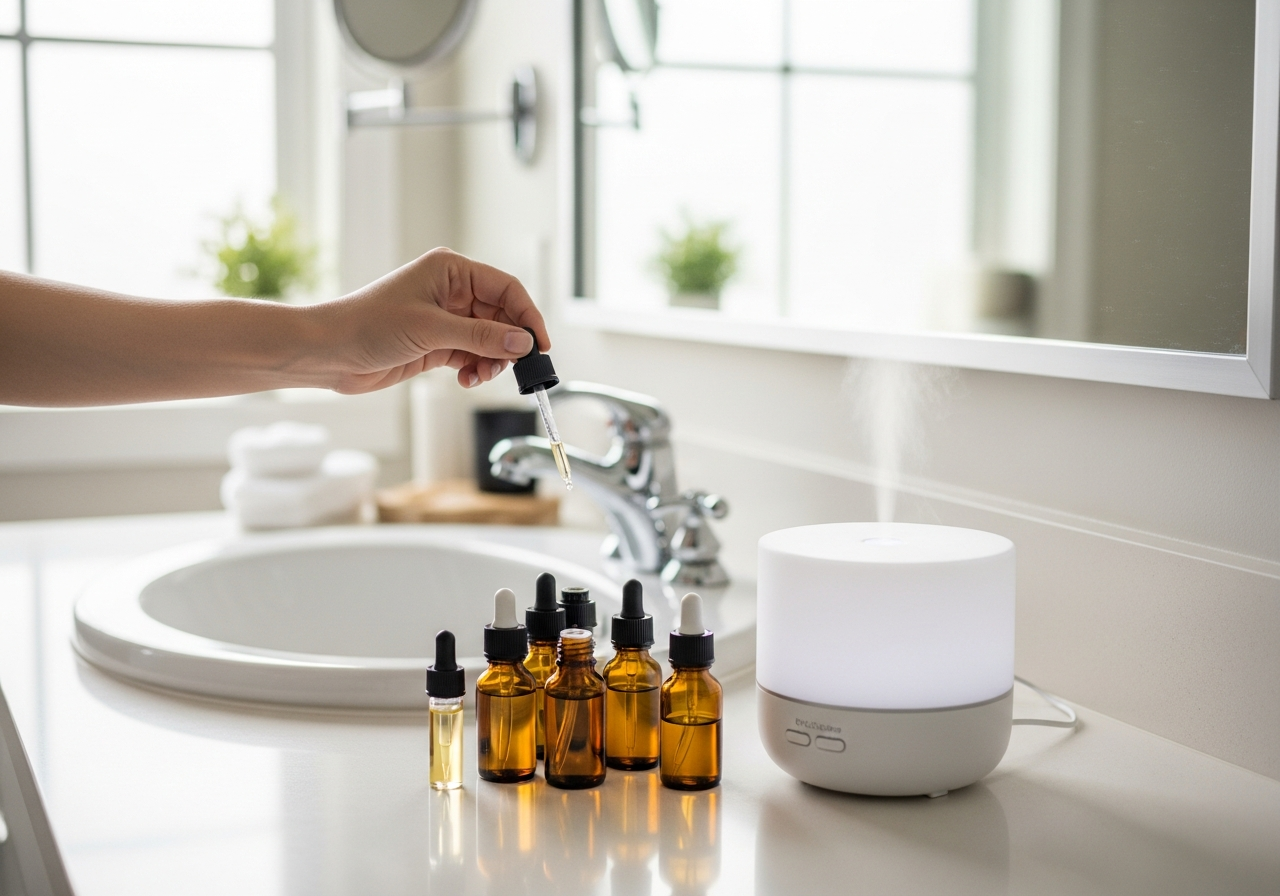
If you’ve ever stood in front of a beautifully designed electric diffuser wondering whether your collection of perfume-like oils can go into it, you are certainly not alone. There have been millions of people who are curious to know the same.
The truth? You can use fragrance oils in some diffusers, but only if you understand how they work, the type of diffuser you own, and the safety precautions involved.
This is the ultimate guide that breaks down everything you want to know about the question: Can you use fragrance oil in a diffuser? Let’s explore whether using fragrance oil in a diffuser is safe, how long it lasts, and the correct way to do it, so your home smells luxurious without damaging your device.
What Exactly Are Fragrance Oils?
Before learning how to use fragrance oil in a diffuser, you need to know what fragrance oils are and how they differ from essential oils.
Fragrance Oils Are:
- A blend of aromatic compounds, including natural, synthetic, or a mix.
- Designed for various uses like home fragrance, candles, soaps, or personal care products
- They are more stable and longer-lasting than pure essential oils
- Typically, more affordable due to its lab-crafted consistency
Why This Information Matters for Diffusers?
Fragrance oils may contain carrier solvents or heavier molecules that don’t evaporate as cleanly as essential oils. Some diffuser models handle this well, and others don’t.
So, Can You Use Fragrance Oil in a Diffuser?
Yes, you can, but only in the right type of diffuser and with proper care. It is also important to note that different diffuser designs respond differently to the viscosity and composition of fragrance oils.
Which Diffusers Allow Fragrance Oils? A Detailed Breakdown
1. Ultrasonic Diffusers (Most Popular Worldwide)
Ultrasonic diffusers are the most common devices used in modern homes. They work by vibrating a small metal plate at ultrasonic frequencies, converting water and oil into a fine-scented mist. When people search “can you use fragrance oil in a diffuser”, they’re often referring to this category.
Most ultrasonic diffusers can work with fragrance oils, but only if the manufacturer explicitly states that they are compatible. Because fragrance oils often contain non-volatile carriers, they may leave residue on the ultrasonic plate or in the inner tank. Over time, this residue can cause:
- Reduced mist production
- Gurgling noises
- Shortened motor lifespan
- Difficulty sensing water levels
2. Nebulising Diffusers (Oil-Only Devices)
Nebulisers do not use water. Instead, they atomise pure oils into microscopic particles. Such devices are engineered for thin, volatile essential oils. Because fragrance oils can be thicker or contain diluents, they can clog internal tubes, hinder atomisation, or cause long-term damage.
So while people often ask, “Can you use fragrance oil in a diffuser like a nebuliser?” the accurate answer is: Nebulisers should only be used with pure, lightweight essential oils.
3. Reed Diffusers (Best for Fragrance Oils)
Reed diffusers are one of the safest and most effective systems for fragrance oils. They do not rely on heat, electricity, or even ultrasonic mechanisms. In fact, wooden reeds absorb the oil and naturally diffuse it into the air through capillary action.
If you are looking to use fragrance oil in a diffuser without compatibility issues, reed diffusers are the ideal option.
4. Ceramic Diffusers & Tea-Light Diffusers
These diffusers use gentle warming to evaporate oils. Most fragrance oils are compatible with them, but overheating must be avoided.
When overheated, fragrance oils can burn, producing an unpleasant smell and reducing the integrity of the fragrance blend.
Are There Any Benefits of Using Fragrance Oil in a Diffuser?
Despite the myths surrounding their use, fragrance oils offer several significant advantages when used correctly in compatible diffusers.
- Longer-Lasting Aroma
Fragrance oils are formulated with fixatives that make them last longer than essential oils. According to studies in fragrance chemistry, scented compositions with fixatives can last longer in diffusers.
This means that using fragrance oil in a diffuser results in a more persistent aroma.
- Greater Scent Variety
Essential oils are limited to plant-derived scents. By contrast, fragrance oils offer unlimited creativity, from gourmand dessert notes to premium perfume-inspired blends.
This is one of the main reasons people prefer experimenting with fragrance oil in a diffuser.
- Stable and Consistent
Since fragrance oils are lab-formulated, their aroma stays consistent across batches, a huge advantage for users who want predictable, repeatable scent experiences.
- Cost-effective & Accessible
Pure essential oils can be costly due to extraction processes. Fragrance oils provide high fragrance impact at a fraction of the cost, making them ideal for everyday home use.
How to Use Fragrance Oil in a Diffuser: Step-by-Step Guide
Understanding how to use fragrance oil in a diffuser properly makes all the difference. Here are the steps that you can follow:
Step 1: Check Your Diffuser’s Manual Thoroughly
Before you start adding anything, make sure your device supports fragrance oils. Manufacturers provide guidelines for good reason, as device structure, material, and mechanism vary widely. Ignoring this can cause permanent damage.
Step 2: Begin With a Small Amount of Oil
Fragrance oils are stronger than essential oils. Start with:
- 2–3 drops per 100 ml
- 4–5 drops for large diffusers (200–300 ml)
If you add too much fragrance oil to a diffuser, it will leave residue, reduce mist output, and, more importantly, overwhelm the senses.
Step 3: Use Purified or Distilled Water
Tap water often contains minerals that bind with oil residue and coat the diffuser tank. Distilled water improves mist performance and protects the ultrasonic plate.
Step 4: Clean Regularly: Ideally, After Every 3–4 Uses
Fragrance oils are known to contain heavier molecules than essential oils; hence, cleaning is essential. Use:
- Warm distilled water
- White vinegar
- Soft microfiber cloth
It will help to prevent clogging, staining, and reduced mist quality.
Step 5: Avoid Oils With Dyes or Heavy Colourants
Coloured oils can stain the diffuser tank, mainly in white or translucent devices.
Safety Tips Before Using Fragrance Oils Indoors
Before diffusing any fragrance oil, ensure you use it safely and correctly. Taking the right precautions helps protect your health, your diffuser, and the overall air quality of your space.
Follow the checklist below:
- Make sure the room has proper ventilation.
- The diffusion sessions must be limited to 30–60 minutes.
- Use only high-quality, IFRA-certified fragrance oils.
- Keep fragrance oils away from pets, infants, and sensitive individuals.
- Check if the diffuser you are using is compatible with fragrance oils.
- Start with a low oil concentration to avoid overly strong scents.
- Clean the diffuser after every 3–4 uses.
- Avoid oils with dyes or heavy additives.
- Fragrance oils must be stored in a cool, dark place. Also, make sure it’s kept out of reach of children.
Conclusion
Ultimately, using fragrance oil in a diffuser is both safe and rewarding when done with the right diffuser and proper care. When it comes to shifting a room’s energy and creating an atmosphere that reflects your mood or style, a few drops of fragrance oil in a diffuser is more than enough. With the right approach, fragrance oils become a simple yet powerful way to enhance your space, cleanly and effortlessly, with fragrance that lingers beautifully.
Frequently Asked Questions
Can you safely use fragrance oil in a diffuser?
Yes, you can absolutely use fragrance oil in a diffuser safely as long as the diffuser is designed to handle fragrance blends. Always check the manufacturer’s manual before use to prevent residue buildup or device damage.
How much fragrance oil should I use in an ultrasonic diffuser?
Start with 2–3 drops of fragrance oil in a diffuser filled with 100 ml of water. Because fragrance oils are stronger and thicker than essential oils, using too many will eventually overwhelm the space and produce residue.
Do fragrance oils last longer in a diffuser than essential oils?
Yes, fragrance oils contain fixatives and stabilisers that help them last much longer in diffusers compared to essential oils, making them a great choice for long-lasting room scents.
Can you use fragrance oil in a diffuser for aromatherapy benefits?
Fragrance oils are designed for scent, not therapeutic effects. If you want emotional or wellness benefits, essential oils are a better choice. However, fragrance oils are excellent for creating ambience.