
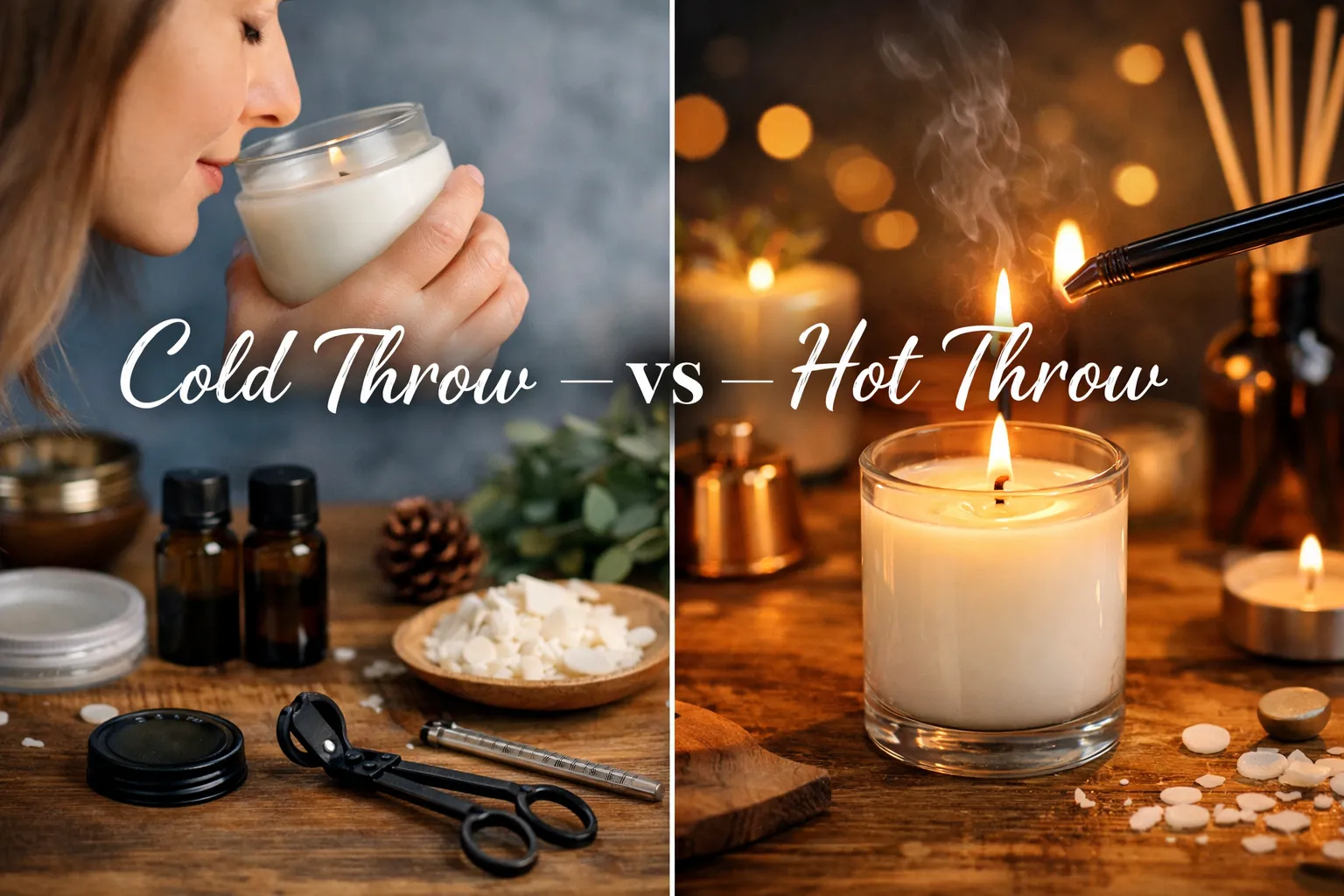
Cold throw is one of the first things people notice when they pick up a candle. Before the candle is ever lit, the scent it gives off can shape how someone feels about its quality. For UK candle makers, understanding how cold throw compares with hot throw is key to making candles that truly impress from start to finish.
This informative blog breaks down the difference between cold throw and hot throw, explains why both matter, and shares simple ways to improve overall scent throw. Whether you are just starting or refining your craft, this article will help you make better, more fragrant candles.
What Is Cold Throw in Candle Making?
Cold throw refers to the scent a candle gives off when it is not lit. It is the smell you notice when you open the lid, walk past the candle, or hold it close to your nose.
For many buyers, cold throw is the first impression. A strong, pleasant scent can make someone feel confident about their purchase. A weak or unclear smell can do the opposite, even if the candle performs well when burning.
Cold throw depends on how well the fragrance oil binds with the wax and how easily the scent can escape into the air at room temperature.
Why Cold Throw Matters to Customers
Cold throw plays a significant role in buying decisions, especially in shops and markets. People often smell a candle before they buy it. If the scent is inviting, they are more likely to take it home.
A good cold throw can also make a helpful candle even when it is not lit. Some people enjoy the soft scent in smaller spaces like bedrooms, bathrooms, or wardrobes.
For candle makers, cold throw is a sign of good formulation and quality ingredients.
What Is Hot Throw and How Is It Different?
Hot throw is the scent a candle releases when it is burning. As the wax melts and warms up, the fragrance oils evaporate and spread into the room.
Hot throw is often seen as the actual test of a candle’s performance. A candle may smell great when cold, but if it does not fill the room once lit, customers may feel let down.
The main difference between cold throw and hot throw is heat. Heat helps fragrance oils travel further and become more noticeable. That is why some scents that seem light when cold can become strong and prosperous when warm.
Why Hot Throw Is Just as Important
Hot throw affects how a candle performs in real use. People light candles to create a mood, comfort, or freshness. If the scent does not travel well, the candle may feel weak or ineffective.
A balanced candle should have both a pleasant cold throw and a strong, clean hot throw. One should not come at the cost of the other.
Understanding Overall Scent Throw
Scent throw is the general term used to describe how well a candle releases fragrance into the air. It includes both cold throw and hot throw.
Good scent throw means the fragrance is clear, balanced, and noticeable without being too strong. It should fill the space gently and evenly.
Scent throw is influenced by several factors, including wax type, fragrance oil quality, wick choice, and how the candle is made and cured.
Key Differences Between Cold Throw and Hot Throw
Understanding the differences helps candle makers know what to adjust during testing.
- Cold throw is experienced before lightning.
- Hot throw is experienced during burning.
- Cold throw depends more on wax and fragrance binding.
- Hot throw depends more on heat, wick, and melt pool.
- Cold throw affects first impressions.
- Hot throw affects long-term satisfaction.
Both are important and should be tested separately.
Factors That Affect Cold Throw
Several elements can change how strong or weak a candle smells when cold.
Wax Type
Different waxes hold and release fragrance in different ways.
Soy wax is popular in the UK but can sometimes have a lighter cold throw. Paraffin wax often has a stronger cold throw, while blends aim to balance both.
The structure of the wax affects how fragrance oils sit inside it and how easily they escape.
Fragrance Oil Quality
High-quality fragrance oils are designed to bind well with wax and release scent evenly. Poor-quality oils may smell flat or fade quickly.
It is where working with a reliable supplier matters. Fragrance oils crafted for candle use give more consistent results.
Fragrance Load
Fragrance load is the percentage of fragrance oil added to the wax. Too little can lead to weak scent throw. Too much can cause sweating, poor burn, or muted scent.
Staying within the recommended load for your wax is essential for a good cold throw.
Cure Time
Candles need time to cure. It allows the wax and fragrance to bond fully.
Most candles benefit from at least one to two weeks of curing. Testing too early can give false results and make the cold throw seem weaker than it really is.
Factors That Affect Hot Throw
Different but related factors shape hot throw.
Wick Choice
The wick controls how the candle burns. A wick that is too small may not create enough heat to release the fragrance. A wick that is too large can burn too hot and damage the scent.
Testing different wick sizes is key to finding the right balance.
Melt Pool
A full, even melt pool helps fragrance oils evaporate properly. Tunnelling or uneven melting can reduce hot throw.
The container size, wax type, and wick all play a role here.
Room Size and Airflow
Hot throw can feel different depending on where the candle is used. A small room will fill with scent faster than an ample open space.
Drafts, open windows, and ceiling height can also affect how scent travels.
How to Improve Cold Throw in Your Candles
Improving cold throw does not always mean adding more fragrance. Small changes can make a big difference.
- Use fragrance oils made for candles.
- Choose a wax known for good scent binding.
- Measure fragrance load carefully.
- Allow enough cure time before testing.
- Store candles with lids on to protect the scent.
Testing is key. Make small batches and note how changes affect the result.
How to Improve Hot Throw Without Losing Balance
A strong, hot throw should feel smooth, not overpowering.
- Test different wick sizes.
- Make sure the melt pool reaches the container edges.
- Avoid overloading fragrance oil.
- Burn test candles in real spaces, not just labs.
- Let candles cure fully before final testing.
Remember, a candle should smell good from start to finish, not just in the first hour.
Common Myths About Cold Throw and Hot Throw
There are a few ideas that often confuse beginners.
One myth is that a strong cold throw always means a strong hot throw. It is not always true. Some scents bloom with heat, while others fade.
Another myth is that adding more fragrance oil constantly improves scent throw. In reality, too much oil can block proper evaporation and reduce both cold and hot throw.
Good candle making is about balance, not excess.
Testing Scent Throw the Right Way
Testing helps you understand how your candles really perform.
For cold throw, smell the candle at different distances and times after curing.
For hot throw, light the candle and check the scent after one hour, two hours, and near the end of the burn.
Take notes. Compare batches. Over time, patterns will appear, and your results will improve.
Why the UK Fragrance Oil Market Is So Appealing
The UK fragrance market is seeing steady growth. A 2024 industry report shows the market was valued at about USD 2.45 billion and is expected to grow to nearly USD 3.53 billion by 2030, with an annual growth rate of around 6.33%.
On a global level, the fragrance oil market is also expanding. Demand is rising across personal care, home fragrance, and luxury scent products, with worldwide growth expected to stay between 4.3% and 4.5% each year over the next decade.
This steady rise shows that more people are actively looking for high-quality fragrance oils that are safe, long-lasting, and unique. As a result, suppliers who offer reliable and well-crafted scents have strong opportunities in the UK market.
Why Fragrance Oil Choice Makes a Real Difference
Not all fragrance oils are created equal. Oils made for candles are tested for heat performance, stability, and scent clarity.
Luxeo is a fragrance oil manufacturer that focuses on crafting premium scents with firm performance. With operations in the UAE and France, Luxeo develops high-quality, tailor-made fragrance solutions for candle makers around the world.
Using well-made candle fragrance oils can make it easier to achieve a balanced cold throw, a reliable hot throw, and a pleasing overall scent throw without constant trial and error.
Final Thoughts for UK Candle Makers
Understanding cold throw and how it compares with hot throw is essential for making candles people love. Cold throw shapes first impressions, while hot throw defines the real experience.
By choosing the right wax, fragrance oil, wick, and cure time, you can improve your candle’s scent throw steadily and reliably.
Take your time. Test carefully. Minor adjustments often lead to the most significant improvements. When cold throw and hot throw work together, your candles will stand out for all the right reasons.
To know more, explore the Luxeo expert blog section!
Frequently Asked Questions – FAQ’s
What is a cold throw in candles?
Cold throw is the scent a candle gives off when it is not lit. It is the smell you notice when you open the lid or smell the candle at room temperature. A good cold throw helps create a strong first impression.
Is a cold throw more critical than a hot throw?
No, both matter in different ways. Cold throw helps attract buyers, while hot throw shows how well the candle performs when burning. A high-quality candle should have a balanced scent throw in both states.
Why does a candle have a strong cold throw but a weak hot throw?
It can happen due to wick size, wax type, or poor heat distribution. Some fragrances smell strong when cold but need the proper wick and melt pool to release properly as a hot throw.
How can I improve scent throw without adding more fragrance oil?
You can improve scent throw by using the right wax, choosing a suitable wick, allowing proper cure time, and using high-quality fragrance oils designed for candles. Adding more oil does not continually improve results.
How long should I cure a candle to test cold throw properly?
Most candles should cure for at least one to two weeks. Proper curing allows the fragrance to bind well with the wax, which improves cold throw and leads to a more consistent hot throw when the candle is lit.