Cosmetic brands face a labelling minefield when choosing between fragrance-free and unscented claims. Both terms sound similar, yet they carry distinct technical and regulatory meanings, and getting it wrong can trigger consumer backlash, regulatory scrutiny, or product recalls. Fragrance is one of the most common cosmetic allergens, affecting millions of consumers with sensitive skin, eczema, or chemical sensitivities. As the clean beauty movement gains momentum, transparency around fragrance ingredients has become a competitive advantage. This guide clarifies the definitions, explains the chemistry behind masking agents, outlines formulation best practices, and shows how Luxeolabs supports brands in creating truly fragrance-free products. Whether you’re developing a new personal care line or reformulating existing products, understanding these distinctions is essential for regulatory compliance, consumer trust, and market success. Luxeolabs’ Personal Care expertise and global R&D hubs enable brands to navigate this complex landscape with confidence.
What Does Fragrance-Free Actually Mean?
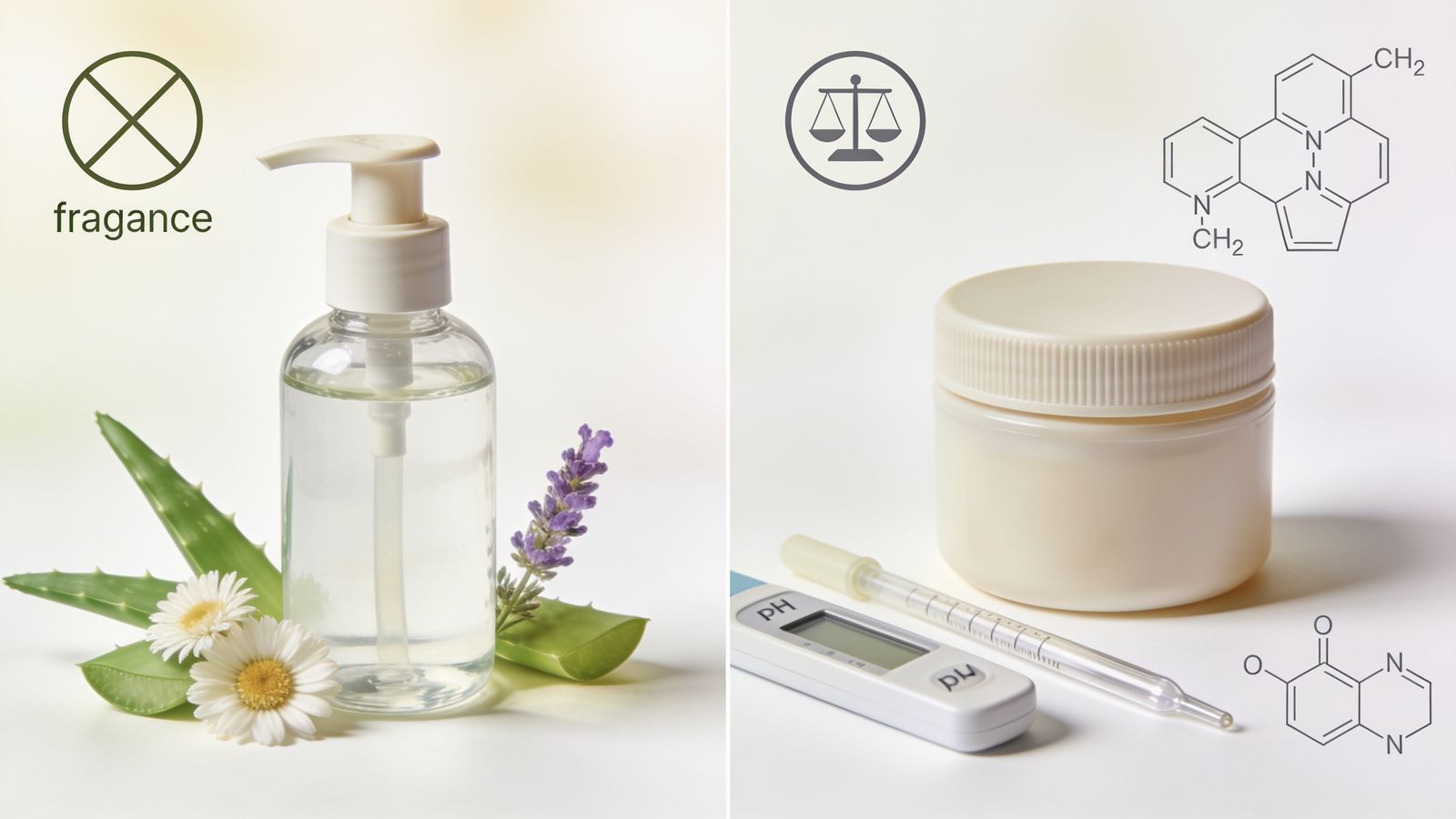
Fragrance-free means no intentional fragrance ingredients were added to the product, no synthetic perfume, no essential oils, and no masking agents. The FDA does not legally define fragrance-free, so brands have flexibility in labelling. However, stricter industry standards, such as those from the National Eczema Association, require zero fragrance materials. Fragrance-free products may still have a natural smell from raw materials like cocoa butter or coconut oil, because those ingredients have inherent odors. The distinction is intent: no ingredients were added to create or modify scent.
A study published in Dermatitis found that 45% of moisturizers labelled fragrance-free still contained fragrance ingredients. This mislabelling erodes consumer trust and can trigger allergic reactions in sensitive individuals. For brands, the stakes are high: consumers with eczema, rosacea, or fragrance sensitivities actively seek fragrance-free products and scrutinize ingredient lists. Mislabelling can lead to negative reviews, returns, and reputational damage.
Luxeolabs’ Sustainability commitment includes ethical sourcing and full transparency in ingredient documentation. When brands partner with Luxeolabs, they receive complete allergen data, IFRA compliance certificates, and formulation support to ensure fragrance-free claims are accurate and defensible.
| Aspect | Fragrance-Free | Unscented |
|---|---|---|
| Definition | No fragrance ingredients added | No noticeable smell |
| Fragrance ingredients added? | No | Yes (masking agents) |
| Masking agents? | No | Often yes |
| Suitable for sensitive skin? | Yes | May trigger reactions |
| Regulatory clarity | Limited (FDA does not define) | Limited |
| Consumer perception | Safest for allergies | Neutral smell, not necessarily safe |
What Does Unscented Mean?
Unscented means the product has no noticeable smell, but it may contain masking fragrances to neutralize raw material odors. Raw ingredients like fatty acids, surfactants, and preservatives often smell unpleasant, so formulators add masking agents to achieve a neutral scent. These masking agents are fragrance chemicals, often the same molecules (linalool, limonene, citral) found in scented products.
Think of it like noise-canceling headphones: the room isn’t quiet, there’s just another sound wave canceling the noise. Unscented products can still trigger fragrance sensitivities because the masking agents are biologically active. They may be listed as parfum, fragrance, or individual components like linalool or geraniol. EU regulations require disclosure of 26 fragrance allergens if present above certain thresholds.
Brands choose unscented formulations to avoid strong scents while maintaining a neutral sensory experience. But this can backfire if consumers assume unscented equals fragrance-free. Clear labelling and ingredient transparency are essential. Luxeolabs’ Innovation team helps brands formulate unscented products with minimal allergen risk, using advanced odor-neutralizing strategies and IFRA-compliant masking agents.
The Chemistry Behind Masking Agents
Masking agents are fragrance chemicals used to neutralize or suppress odors, not to add a pleasant scent. Common masking agents include linalool, limonene, citral, geraniol, eugenol, and coumarin. These are the same molecules found in essential oils and synthetic fragrances, they are not inert. Masking works by introducing competing molecules that bind to olfactory receptors, blocking the perception of unpleasant odors.
Masking agents are often listed as parfum or aroma (catch-all terms that can represent hundreds of chemicals) or as individual components if present above a threshold. The EU requires disclosure of 26 fragrance allergens if they exceed 0.001% in leave-on products or 0.01% in rinse-off products. In the US, brands can list fragrance without disclosing individual components, which creates transparency gaps.
Phthalates are sometimes used as masking agents in unscented products. These plastic enhancers are linked to endocrine disruption, neurodevelopmental issues, asthma, and allergies, according to EPA and CDC research. High-quality, IFRA-compliant fragrances, like those from Luxeolabs, do not contain phthalates or dangerous chemicals. But hidden masking agents in unscented products can pose risks.
The formulation trade-off is clear: masking agents improve sensory experience but add allergen risk. Luxeolabs’ Advanced Formulations use green chemistry and rigorous testing to minimize allergen exposure while maintaining product performance. Our ISO 9001, GMP, and IFRA compliance ensures every formulation meets global safety standards.
Why Fragrance Is a Top Cosmetic Allergen
Fragrance is one of the most common triggers of allergic contact dermatitis, affecting 1–3% of the general population and 5–11% of people with existing skin conditions, according to dermatology research. Reactions include irritant contact dermatitis (chemical irritation), allergic contact dermatitis (delayed immune response), and phototoxic reactions (sun sensitivity). Symptoms manifest as redness, itching, burning, flaking, or eczema flares.
Both synthetic and natural fragrances can trigger reactions, essential oils are not automatically safer. Common allergens include linalool, limonene, citral, geraniol, eugenol, and coumarin, found in lavender, citrus, rose, and cinnamon. Studies link fragrance exposure to respiratory issues like asthma and allergies, as well as systemic effects from phthalates.
Sensitive-skin consumers actively avoid fragrance. Brands that mislabel or hide fragrance ingredients risk losing trust and market share. Dermatologists routinely recommend fragrance-free products for patients with eczema, rosacea, or compromised skin barriers. Luxeolabs’ Personal Care formulations are dermatologically tested and designed for sensitive applications, ensuring safety without sacrificing performance.
Essential Oils: Natural Doesn’t Mean Safe
Essential oils are concentrated plant extracts containing hundreds of chemical compounds, many of which are potent allergens and irritants. Common essential oil allergens include geraniol, eugenol, citral, and limonene, found in lavender, tea tree, citrus, and eucalyptus. Essential oils can cause the same reactions as synthetic fragrances: allergic contact dermatitis, irritant dermatitis, and phototoxic reactions.
Even diluted essential oils can trigger reactions in sensitive individuals. Natural does not mean mild, it just means plant-derived. Dermatology research shows essential oils are among the top causes of skin reactions alongside synthetic fragrance. Brands use essential oils for consumer perception (natural equals safe) and functional benefits like antioxidant or antimicrobial properties. But for fragrance-free formulations, essential oils should be avoided unless added for a non-scent function (e.g., preservative, emollient) and disclosed clearly.
Luxeolabs’ Premium Raw Materials sourcing ensures transparency and traceability. When essential oils are used, they’re selected for functional performance, not fragrance, and documented with full allergen data.
Regulatory Ambiguity and Labeling Best Practices
The FDA treats cosmetics as non-medical products and does not pre-approve formulations or legally define fragrance-free or “unscented.” Brands have flexibility in labelling, which creates confusion and risk. The Federal Food, Drug, and Cosmetic Act (1938) prohibits misbranded cosmetics, but without legal definitions, enforcement is limited. Fragrance formulas are considered trade secrets, so brands can list parfum or fragrance without disclosing individual components.
The EU is stricter: it requires disclosure of 26 fragrance allergens if present above 0.001% (leave-on) or 0.01% (rinse-off). This transparency helps consumers with sensitivities make informed choices.
Best practices for brands:
- Use fragrance-free only if zero fragrance ingredients (including masking agents and essential oils) are added.
- Use unscented if masking agents are present, and disclose them on the ingredient list.
- Avoid vague claims like no perfume or natural fragrance without clarification.
- List individual allergen components (linalool, limonene) even if not required by US law, transparency builds trust.
- Seek third-party certification (e.g., National Eczema Association, EWG Verified) to validate claims.
- Work with a reputable fragrance supplier like Luxeolabs that provides full ingredient documentation, IFRA compliance, and allergen data.
Luxeolabs is ISO 9001, GMP & IFRA Compliant, offering tailored samples, compliance support, and regulatory confidence for brands navigating complex labelling requirements.
Formulating Truly Fragrance-Free Products: Technical Considerations
Formulating fragrance-free products presents unique challenges. Raw materials often have unpleasant odors, fatty acids, surfactants, and preservatives can smell off-putting. Without masking agents, the product may not meet consumer sensory expectations. But brands committed to fragrance-free formulations can achieve success with the right strategies.
Key strategies:
- Select low-odor raw materials: Refined oils, odorless emulsifiers, and neutral-smelling preservatives minimize inherent odors.
- Use advanced processing techniques: Molecular distillation and deodorization remove volatile odor compounds.
- Optimize pH and preservative systems: Certain preservatives and pH levels reduce chemical odors.
- Conduct stability testing: Ensure odor does not develop over shelf life due to oxidation or microbial activity.
- Educate consumers: Fragrance-free products may have a mild natural smell, this is not a defect.
Luxeolabs’ Advanced Formulations and Global R&D Hubs in Grasse, Sharjah, and Mumbai enable brands to create high-performance fragrance-free bases with minimal odor. Our process includes sourcing premium raw materials, leveraging green chemistry, conducting rigorous stability testing, and providing full documentation (MSDS, IFRA certificates, allergen data). Luxeolabs offers Tailored Fragrance Solutions and Fastrack Solutions (samples in 3 days, final products in 7 days) to help brands launch fragrance-free lines quickly.
| Challenge | Strategy | Luxeolabs Solution |
|---|---|---|
| Raw material odor | Select low-odor ingredients | Premium raw materials, advanced sourcing |
| Stability over time | Optimize pH, preservatives, conduct testing | Rigorous stability testing, green chemistry |
| Sensory experience | Advanced processing (distillation, deodorization) | Molecular distillation, odor-neutralizing tech |
| Regulatory compliance | Full documentation, allergen data | IFRA compliance, ISO 9001, GMP certification |
| Consumer education | Clear labelling, transparency | Full ingredient documentation, support materials |
| Consumer perception | Safest for allergies | Neutral smell, not necessarily safe |
Market Demand for Fragrance-Free Products
Consumer demand for fragrance-free products is growing rapidly, driven by several factors:
- Rising prevalence of sensitive skin, eczema, and allergies: More consumers experience adverse reactions to fragrance.
- Clean beauty movement: Emphasis on transparency, minimal ingredients, and allergen-free formulations.
- Increased awareness of fragrance allergens and health risks: Phthalates, endocrine disruptors, and respiratory irritants are under scrutiny.
- Dermatologist recommendations: Fragrance-free products are routinely recommended for sensitive and compromised skin.
Fragrance-free skincare is a fast-growing segment, with brands like CeraVe, Vanicream, and La Roche-Posay leading the market. Fragrance-free is now a competitive advantage, brands that offer truly fragrance-free options with transparent labelling capture loyal, high-value customers. These consumers are willing to pay premium prices for products that won’t trigger reactions.
Luxeolabs supports brands in meeting this demand by providing fragrance-free bases, custom formulations, and regulatory support. Our Client-Centric Approach ensures fragrances align with brand identities and market demands, whether you’re launching a new line or reformulating existing products.
How to Communicate Fragrance-Free vs Unscented to Consumers
Clear communication is essential to avoid confusion and build trust. Consumers with sensitivities scrutinize labels and expect honesty. Misleading claims can lead to negative reviews, returns, and lost loyalty.
Best practices:
- Define terms clearly: On product pages and packaging, explain what fragrance-free and unscented mean.
- List all ingredients: Include masking agents and essential oils on the label.
- Use plain language: “No added fragrance or essential oils” is clearer than “fragrance-free.”
- Educate consumers: Fragrance-free products may have a natural smell from raw materials, this is normal.
- Highlight third-party certifications: National Eczema Association, EWG Verified, or similar seals validate claims.
- Provide allergen data: IFRA compliance documentation and allergen lists demonstrate transparency.
Luxeolabs helps brands communicate effectively by providing full ingredient documentation, allergen data, and regulatory support. Our Expert Insights include tailored samples and compliance support to ensure your messaging is accurate and consumer-friendly.
Why Partner with Luxeolabs for Fragrance-Free Formulations?
Luxeolabs is a global fragrance house with facilities in Grasse (France), Sharjah (UAE), Istanbul (Turkey), and Mumbai (India). We combine French perfumery heritage with modern innovation, offering brands the technical expertise and regulatory support needed to create truly fragrance-free products.
Our capabilities:
- ISO 9001, GMP, and IFRA compliant: Ensuring safety, quality, and regulatory adherence.
- Advanced formulation expertise: Green chemistry, cruelty-free practices, AI-supported design.
- Tailored fragrance solutions: Custom formulations for fine fragrance, personal care, home care, and fabric care.
- Fastrack Solutions: Samples in 3 days, final products in 7 days.
- Full transparency: Complete ingredient documentation, allergen data, IFRA certificates, and MSDS.
- Scalable production: Flexible MOQs for startups and high-volume production for established brands.
Whether you’re developing a fragrance-free skincare line, reformulating existing products, or navigating regulatory requirements, Luxeolabs provides the expertise, infrastructure, and support to bring your vision to life. Visit our Contact Us page to request samples or discuss your project.
Conclusion
Understanding the difference between fragrance-free and unscented is essential for cosmetic brands navigating today’s transparency-driven market. Fragrance-free means no fragrance ingredients added, no synthetic perfume, no essential oils, no masking agents. Unscented means no noticeable smell, but masking agents may be present. Both terms have distinct technical and regulatory meanings, and mislabelling can erode consumer trust and trigger allergic reactions. Luxeolabs’ global R&D hubs, IFRA compliance, and advanced formulation expertise enable brands to create truly fragrance-free products that meet consumer expectations and regulatory standards. Partner with Luxeolabs to navigate this complex landscape with confidence.
FAQ
What’s the main difference between fragrance-free and unscented products?
Fragrance-free means no fragrance ingredients were added, no synthetic perfume, no essential oils, no masking agents. Unscented means no noticeable smell, but masking agents (which are fragrance chemicals) may be present to neutralize raw material odors. Both can trigger reactions in sensitive individuals, but fragrance-free is generally safer for those with allergies or eczema.
Can unscented products still cause allergic reactions?
Yes. Unscented products often contain masking agents like linalool, limonene, or citral, the same molecules found in scented products. These are biologically active and can trigger allergic contact dermatitis, irritant reactions, or respiratory issues. If you have fragrance sensitivities, look for truly fragrance-free products with no masking agents listed on the label.
Are essential oils safer than synthetic fragrances?
Not necessarily. Essential oils are concentrated plant extracts containing potent allergens like geraniol, eugenol, and citral. They can cause the same reactions as synthetic fragrances, allergic contact dermatitis, irritant dermatitis, and phototoxic reactions. Natural does not mean mild or safe. For fragrance-free formulations, avoid essential oils unless added for a non-scent function and disclosed clearly.
How can brands ensure their fragrance-free claims are accurate?
Work with a reputable fragrance supplier like Luxeolabs that provides full ingredient documentation, IFRA compliance certificates, and allergen data. Use fragrance-free only if zero fragrance ingredients (including masking agents and essential oils) are added. List all ingredients on the label, seek third-party certification, and educate consumers that fragrance-free products may have a natural smell from raw materials.
What should I look for on a label to identify masking agents?
Look for parfum, fragrance, or aroma (catch-all terms), or individual components like linalool, limonene, citral, geraniol, eugenol, or coumarin. The EU requires disclosure of 26 fragrance allergens if present above certain thresholds. In the US, brands can list fragrance without disclosing individual components, so scrutinize ingredient lists carefully and choose brands that prioritize transparency.