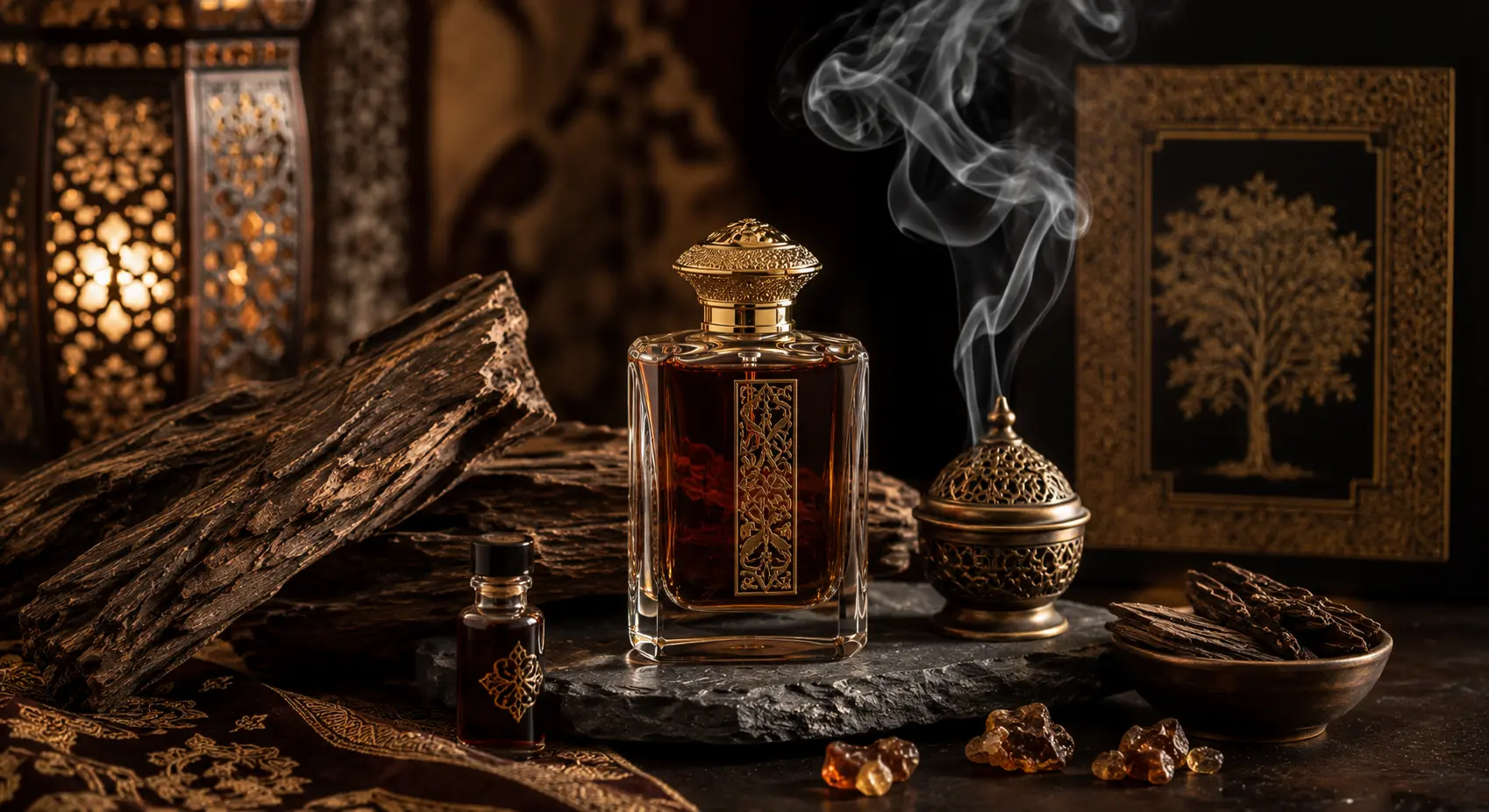
Oud perfume represents one of the most coveted and complex fragrances in the world, often called liquid gold for its rarity and cultural significance. This ancient aromatic treasure, derived from the heartwood of Aquilaria trees, has captivated perfume enthusiasts across Middle Eastern and Asian traditions for centuries. Whether you're a fragrance newcomer curious about oud's mystique or an experienced collector seeking deeper knowledge, this guide covers everything from oud's natural formation to professional application techniques. We'll explore how this precious ingredient transforms from infected tree resin into the sophisticated fragrances that define luxury perfumery today, drawing on insights from LuxeoLabs' fragrance expertise and global industry practices.
Oud, also known as agarwood or aleswood, forms when Aquilaria trees become infected with a specific type of mould called Phialophora parasitica. This infection triggers the tree's natural defence mechanism, producing a dark, resinous heartwood that carries the distinctive oud aroma. Only about 2% of wild Aquilaria trees naturally develop this infection, making authentic oud extraordinarily rare.
The transformation process can take decades. When the mould penetrates healthy Aquilaria wood, the tree responds by secreting aromatic compounds to protect itself. These compounds gradually saturate the heartwood, creating the complex chemical profile that gives oud its characteristic scent. The longer the infection persists, the deeper and more valuable the resulting oud becomes.
Modern cultivation attempts to replicate this natural process through controlled inoculation, but wild-harvested oud remains the most prized. The sustainability challenges of traditional harvesting have led innovative manufacturers to develop high-quality synthetic alternatives that capture oud's essence while protecting endangered tree populations.
The journey from infected Aquilaria wood to finished perfume involves several intricate processes, each affecting the final fragrance's character and quality. Traditional methods have evolved alongside modern extraction techniques, offering perfumers different tools to capture oud's complexity.
Hydro-distillation remains the most common extraction method. Craftsmen soak oud wood chips in water for days or weeks, then steam-distil the mixture in copper stills. This process can take 15-30 days, with the distiller monitoring temperature and timing to extract different aromatic compounds. The first distillation produces the lightest, most volatile notes, while subsequent distillations yield deeper, more resinous qualities.
Modern perfumery houses like LuxeoLabs combine traditional wisdom with advanced formulation techniques. Their perfumers, including Flora Gourdon and Ankush Chinchane, work with both natural oud oils and sophisticated synthetic molecules to create consistent, scalable fragrances that maintain oud's mystique while meeting contemporary performance standards.
Quality grading depends on factors including wood age, infection depth, geographic origin, and extraction skill. Premium grades command extraordinary prices, while commercial grades make oud accessible to broader markets through careful blending and synthetic enhancement.
Oud's fragrance profile defies simple categorisation, evolving dramatically from initial application through its 8-12 hour development on skin. This complexity stems from oud's rich chemical composition, containing over 150 identified aromatic compounds that interact differently with individual skin chemistry and environmental conditions.
The opening notes typically present woody and sometimes medicinal qualities, often described as barnyard-like or animalic by newcomers. These challenging top notes quickly give way to the heart of the fragrance, where oud reveals its true character. Sweet, honeyed facets emerge alongside smoky, incense-like qualities that have made oud central to spiritual and ceremonial practices across cultures.
As oud enters its base phase, the scent becomes increasingly sophisticated. Warm, resinous notes dominate, often accompanied by leather-like nuances and subtle floral undertones. This final stage can persist for hours, creating an intimate scent bubble that evolves with body heat and movement.
The quality of oud significantly affects its scent journey. High-grade natural oud offers seamless transitions between phases, while lower grades or synthetic versions may present more abrupt changes. Professional perfumers often blend different oud qualities to achieve specific olfactory goals, balancing authenticity with wearability.
Temperature and humidity dramatically influence oud's performance. In hot climates, oud can become overwhelming if applied too liberally, while cooler conditions may require more generous application to achieve the desired presence.
Geographic origin profoundly influences oud's character, with each region producing distinctive aromatic signatures based on local Aquilaria species, climate conditions, and traditional processing methods. Understanding these regional variations helps fragrance enthusiasts choose ouds that match their preferences and occasions.
Cambodian oud represents the gold standard for many collectors. Wild Cambodian agarwood produces intensely complex oils with powerful animalic opening notes that develop into rich, earthy bases. The scent can be challenging for newcomers but offers unparalleled depth and longevity.
Indian oud, particularly from Assam, carries distinctive smoky and medicinal qualities. Traditional Ayurvedic practices have used Indian oud for centuries, and its bold character makes it ideal for ceremonial applications. The scent tends to be more linear than other varieties, maintaining its intensity throughout wear.
Thai oud offers the most approachable entry point for beginners. Its naturally sweet, honeyed character requires less acclimatisation, while still providing authentic oud complexity. Thai plantations have perfected cultivation techniques that produce consistent quality at more accessible price points.
Laotian oud commands premium prices for its refined, almost floral character. The scent develops with exceptional elegance, making it suitable for formal occasions where subtlety matters. Limited availability keeps Laotian oud in high demand among connoisseurs.
The choice between natural and synthetic oud involves balancing authenticity, sustainability, and budget considerations. Natural oud prices range from $5,000 to $80,000 per kilogram depending on quality and origin, while high-quality synthetic alternatives offer consistent performance at accessible prices.
Natural oud provides unmatched complexity and cultural authenticity. Each batch carries unique characteristics influenced by the specific tree, infection pattern, and processing methods. This individuality appeals to collectors and traditionalists who value oud's spiritual and cultural significance. However, natural oud's rarity and price make it impractical for many commercial applications.
Synthetic oud molecules, developed through advanced chemistry, can replicate specific aspects of natural oud's scent profile with remarkable accuracy. Modern synthetics like Firescence and Oud Firescence capture oud's smoky, woody character while providing consistency and sustainability. LuxeoLabs' advanced formulations often combine natural and synthetic elements to achieve optimal performance and accessibility.
The sustainability argument strongly favours synthetic alternatives. Wild Aquilaria populations face severe pressure from overharvesting, with several species now endangered. Plantation cultivation helps but cannot fully replace wild varieties' complexity. Synthetic oud allows perfumers to create authentic-smelling fragrances without contributing to environmental degradation.
Quality synthetic oud offers several practical advantages: consistent batch-to-batch performance, better stability in various formulations, and compatibility with modern safety regulations. Many contemporary oud fragrances use synthetic bases enhanced with small amounts of natural oud for authenticity and depth.
Oud perfume pricing reflects a complex interplay of rarity, processing intensity, cultural demand, and market positioning. Understanding these factors helps consumers make informed decisions across different price segments.
Raw material costs dominate oud pricing. Premium wild-harvested oud oils can cost $50,000-$80,000 per kilogram, while plantation-grown alternatives range from $1,000-$10,000 per kilogram. These extreme raw material costs explain why authentic oud perfumes often retail for $200-$2,000 per bottle.
Processing intensity significantly affects final prices. Traditional distillation methods requiring weeks of careful monitoring command premium prices, while modern extraction techniques offer efficiency at lower costs. The distiller's skill and reputation also influence pricing, with master distillers' work commanding exceptional premiums.
Cultural and religious demand creates additional price pressure. Oud's significance in Islamic traditions and Middle Eastern culture maintains consistent demand regardless of global economic conditions. This cultural foundation provides price stability but limits accessibility for casual users.
Market positioning varies dramatically between traditional oud houses and contemporary fragrance brands. Traditional Middle Eastern producers often focus on pure oud oils, while Western brands typically offer oud-based compositions with complementary notes. These different approaches create distinct price segments serving different consumer preferences.
Commercial oud fragrances typically range from $50-$300, using synthetic bases with natural oud accents. Mid-range options ($300-$800) often feature higher natural oud content with premium packaging and presentation. Luxury segments ($800+) emphasise rare materials, artisanal processing, and exclusive distribution.
Contemporary perfumers have developed sophisticated oud combinations that make this complex ingredient more accessible while preserving its essential character. These pairings demonstrate oud's versatility and help newcomers find their preferred style.
Oud + Rose represents the most classic Middle Eastern combination. The floral sweetness of rose, particularly Bulgarian or Taif varieties, softens oud's intensity while creating luxurious depth. This pairing appears in countless traditional attars and modern Western interpretations.
Oud + Vanilla offers exceptional approachability for beginners. Vanilla's creamy sweetness masks oud's challenging opening notes while allowing its woody complexity to emerge gradually. This combination works particularly well in evening fragrances and cooler weather.
Oud + Saffron creates spicy luxury that epitomises Middle Eastern perfumery. Saffron's golden warmth complements oud's resinous character, producing fragrances that feel both exotic and sophisticated. This pairing suits formal occasions and cultural celebrations.
Oud + Citrus provides fresh openings that ease oud's intensity. Bergamot, lemon, or grapefruit create bright introductions that gradually reveal oud's depth. This combination makes oud suitable for daytime wear and warmer climates.
Oud + Amber amplifies warmth and richness through complementary resinous notes. Amber's honeyed depth creates seamless transitions with oud's base notes, producing fragrances with exceptional longevity and presence.
Oud + Musk develops skin-like intimacy that enhances oud's natural sensuality. Clean musks provide smooth foundations that allow oud's complexity to shine without overwhelming the wearer or others nearby.
Oud + Sandalwood creates woody symphonies that showcase different facets of each ingredient. Sandalwood's creamy texture contrasts beautifully with oud's intensity, producing balanced compositions suitable for meditation and relaxation.
Oud + Florals represents contemporary innovation in oud perfumery. Jasmine, ylang-ylang, or tuberose create unexpected harmonies that challenge traditional oud presentations while maintaining authentic character.
Proper oud application requires understanding its concentration, your skin chemistry, and the intended occasion. Unlike conventional fragrances, oud's intensity demands careful consideration of placement and quantity.
Pulse point application remains the foundation of oud use. Apply small amounts to wrists, behind ears, and at the base of the throat where body heat will gently diffuse the fragrance. Avoid rubbing applied oud, as friction can alter its development and create harsh opening notes.
Layering strategies depend on oud concentration and format. Pure oud oils require minimal application, often just a tiny dab on one pulse point suffices. Oud-based eau de parfums allow more generous application, while oud colognes can be applied like conventional fragrances.
Seasonal considerations significantly affect oud performance. Summer heat amplifies oud's intensity, requiring lighter application or choosing oud compositions with fresh top notes. Winter conditions may require more generous application to achieve desired projection.
Concentration guidelines help prevent over-application. Start with minimal amounts and increase gradually over several wears as you understand how oud develops on your skin. What seems weak initially often builds to appropriate strength within 30-60 minutes.
Beginner techniques should prioritise subtlety over presence. Apply oud to clothing or hair rather than skin for gentler diffusion. Test new ouds on small skin areas before full application to understand their development pattern.
Advanced users can experiment with layering different oud types or combining oud with complementary fragrances. Professional perfumers often apply different ouds to different pulse points, creating complex personal compositions that evolve throughout the day.
Oud's cultural significance and intensity make occasion selection crucial for appropriate wear. Understanding when and where to wear oud enhances both personal enjoyment and social consideration.
Evening wear represents oud's natural territory. The fragrance's depth and complexity suit dinner parties, cultural events, and intimate gatherings where its presence can be appreciated without overwhelming others. Cooler evening temperatures also help moderate oud's projection.
Formal events benefit from oud's luxurious character, particularly in cultural contexts where oud carries traditional significance. Business meetings in Middle Eastern settings or religious ceremonies often welcome authentic oud presence.
Cultural contexts require sensitivity and understanding. In regions where oud holds spiritual significance, wearing authentic oud shows respect and cultural awareness. However, in unfamiliar cultural settings, subtle application prevents potential misunderstandings.
Climate considerations dramatically affect oud appropriateness. Hot, humid weather can make oud overwhelming, while air-conditioned environments may require more generous application. Desert climates traditionally associated with oud use actually moderate its intensity through dry heat.
Daytime options exist but require careful selection. Light oud compositions with citrus or floral elements can work for daytime wear, particularly in cooler weather or professional settings where sophistication matters more than mass appeal.
Seasonal styling should match oud intensity to weather conditions. Spring calls for light oud florals, summer demands minimal application or fresh oud compositions, autumn suits classic oud roses, and winter welcomes rich oud ambers and spices.
Oud perfume represents one of fragrance's most complex and rewarding experiences, offering depth and sophistication that few other ingredients can match. From its natural formation in infected Aquilaria trees to its transformation into luxury fragrances, oud carries centuries of cultural significance alongside modern innovation. Whether you choose natural oud for its authenticity or synthetic alternatives for sustainability, understanding oud's characteristics helps you make informed decisions that suit your preferences and budget.
For those ready to explore oud's possibilities, start with approachable combinations like oud-vanilla or oud-rose before progressing to more challenging pure varieties. LuxeoLabs' fine fragrance expertise demonstrates how traditional oud wisdom combines with contemporary perfumery to create accessible yet authentic experiences for modern fragrance enthusiasts.
Oud initially presents woody, sometimes medicinal notes that can seem challenging. Within 30 minutes, it develops into warm, sweet, and resinous aromas with honey-like depth. Start with oud-vanilla or oud-rose blends for easier introduction.
Quality oud fragrances start around £80-150 for synthetic-based compositions with natural accents. This price range offers authentic oud character without the premium costs of pure natural oils, which can exceed £500 per bottle.
Yes, but choose lighter oud compositions with citrus or floral elements and apply sparingly. Avoid pure oud oils for daytime wear, especially in warm weather or professional settings where subtlety matters.
Oud typically lasts 8-12 hours with good projection for the first 4-6 hours. High-quality natural oud can persist for 24+ hours, while synthetic versions usually last 6-10 hours depending on concentration and skin chemistry.
Modern synthetic oud offers excellent quality at accessible prices while supporting sustainability. Many premium fragrances blend synthetic and natural oud for optimal performance.