
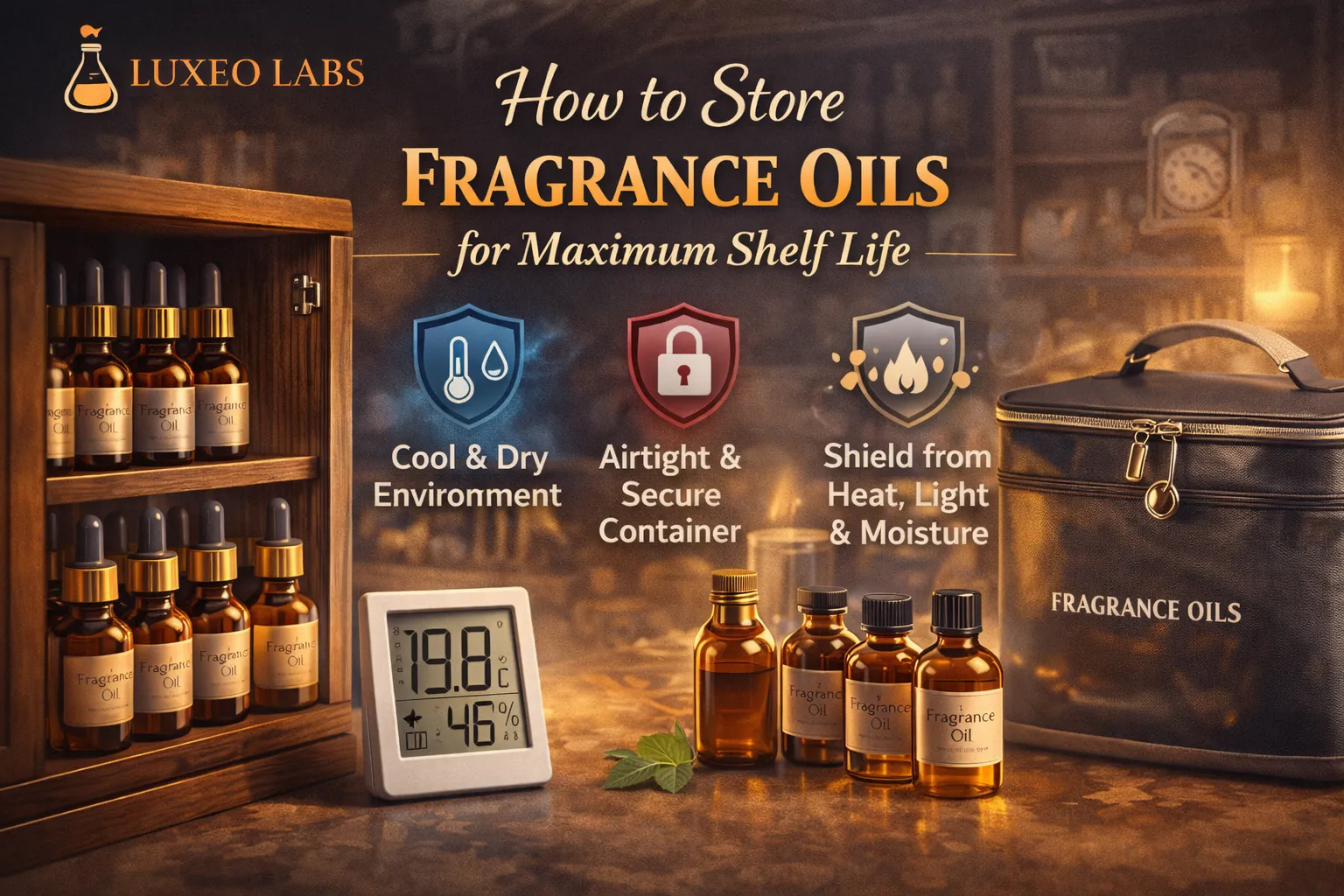
Fragrance oils are delicate blends that require proper care to maintain their quality and performance. Whether you use them for fine fragrances, candles, personal care products, or home scents, how you store them plays a major role in their shelf life. Poor storage can lead to scent loss, colour changes, oxidation, and wasted investment. Understanding how to store fragrance oils correctly helps preserve their original scent profile and ensures consistent results over time. In this guide, we outline practical fragrance oil storage best practices to extend shelf life and protect fragrance quality for both personal and professional use.
Understanding Fragrance Oils & Their Shelf Life
Fragrance oils can be natural or synthetic. Most fragrance oils last one to two years. The actual shelf life depends on the type of oil. Citrus and other top note oils fade faster and usually last one to two years. Floral oils also degrade relatively quickly. Woody, resin, and base note oils are more stable and can last between three and ten years. Synthetic fragrance oils often last longer than natural oils because they resist oxidation better.
Proper storage of fragrance oils is critical to extending shelf life. Oils should be kept in dark, airtight containers. They must be stored away from heat, direct light, air, and humidity. These elements cause oxidation and break down fragrance molecules over time. Using smaller bottles helps limit air exposure. Labelling containers with purchase or opening dates makes it easier to track freshness.
Natural oils are more sensitive to environmental factors. They oxidise faster and lose their scent quality sooner. Synthetic oils are generally more stable. Carrier oils used in fragrance blends typically last 6 months to 2 years. If stored poorly, they can turn rancid.
Why Proper Fragrance Oil Storage Is Critical
Prevents Chemical Breakdown
Fragrance oils are made of delicate aromatic molecules. When exposed to heat, light, air, or moisture, these molecules break down. This alters the oil’s chemical composition and degrades the original scent.
Preserves Scent Strength and Balance
Properly storing fragrance oils helps maintain the balance of top, middle, and base notes. This preserves the scent’s integrity to the perfumer’s original design and ensures lasting fragrance performance.
Reduces Oxidation Risk
Air exposure is one of the biggest threats when storing fragrance oils. Oxygen reacts with the oil, causing oxidation. This can make the scent smell flat, sour, or metallic. Tightly sealed bottles slow this process.
Protects Your Investment
Fragrance oils are often expensive and valuable. Proper storage helps extend their usable life. This prevents waste and saves money over time.
Supports Safe Usage
Poorly stored oils can degrade or become contaminated. This may cause skin irritation or allergic reactions. Clean containers and correct storage conditions help reduce these risks.
Maintains Product Consistency
For candles, soaps, or cosmetic formulations, consistency matters. Proper fragrance oil storage ensures consistent scent quality across batches and supports safe, repeatable production.
Ideal Storage Conditions for Fragrance Oils
Light
Always store fragrance oils in a dark place such as a drawer, cabinet, or original box. Light exposure, especially UV rays, breaks down scent molecules and weakens fragrance strength.
Temperature
Keep fragrance oils at a cool and stable temperature. Avoid areas with frequent temperature changes. Do not store near windows, stoves, radiators, or other heat sources.
Humidity
Fragrance oils must be kept dry. High humidity can affect oil quality. Bathrooms are not suitable for storing fragrance oils due to steam and moisture.
Air and Oxygen Exposure
Oxygen causes oxidation, which fades top notes and alters the scent. Always close caps tightly after use to protect the oil.
Bottle Position
Store bottles upright to prevent leaks and protect caps or spray mechanisms from damage.
Reducing Air Space in Bottles
If a bottle is partially used, transfer the oil into a smaller container. Reducing empty space reduces oxygen exposure, thereby extending shelf life.
Choosing the Right Containers for Fragrance Oil Storage
Material
- Glass is the best option for storing fragrance oils. It does not react with oils and helps maintain purity.
- Amber and cobalt blue glass provide added protection by blocking UV light.
- Plastic should be used with caution. Only high-quality HDPE or PET plastic is suitable for diluted oils. Pure fragrance oils can break down plastic over time.
- Metal containers are a good alternative. Aluminium bottles are durable and opaque, which helps protect oils from light exposure.
Color
- Dark-colored containers, such as amber or cobalt blue, are ideal. They block UV rays and reduce fragrance degradation.
- Clear containers should only be used if oils are stored in a dark cabinet or used within a short time.
Size
- Smaller bottles between 5 ml and 30 ml are best for regular use. They reduce air exposure and slow oxidation.
- Larger bottles work well for bulk fragrance oil storage. For daily use, it is better to transfer oil into smaller bottles.
Closure and Applicator
- Airtight seals are critical when storing fragrance oils.
- Screw caps and dropper caps help prevent evaporation and oxidation.
- Droppers allow accurate measuring and reduce waste.
- Roll-on bottles are useful for direct skin application and personal fragrance use.
How to Store Fragrance Oils After Opening
Once fragrance oils are opened, proper storage becomes even more important. Opened oils should be kept in their original dark-glass bottles or transferred to new dark-glass containers. Store them in a cool, dark, and dry place such as a cupboard. Keep them away from heat and light to protect scent quality. Always close the lid tightly to prevent oxidation and evaporation. Avoid storing fragrance oils in bathrooms or areas with changing temperatures. Moving oil into smaller bottles as the level drops reduces air exposure and improves storage of fragrance oil.
Short-Term vs Long-Term Fragrance Oil Storage

Signs Your Fragrance Oil Has Gone Bad
Change in Smell
A noticeable change in scent is usually the first sign. The oil may smell rancid, sharp, sour, or flat. In some cases, it may simply smell different from when it was new. This often happens due to oxidation.
Color Changes
Fresh fragrance oils usually have a clear or consistent colour. If the oil turns dark, brown, amber, or cloudy, it indicates degradation.
Texture or Consistency Issues
A spoiled fragrance oil may feel thicker, stickier, or unusually oily. Some oils may separate into visible layers.
Cloudiness or Sediment
Cloudiness or particulates indicate that ingredients are degrading over time.
Weaker Performance
When used in candles, soaps, or other products, degraded oils may not diffuse well or last as long as expected.
Skin Reactions
Using spoiled fragrance oils can cause skin irritation or allergic reactions. If irritation occurs, discontinue use immediately.
Common Fragrance Oil Storage Mistakes to Avoid
- Bathrooms experience frequent fluctuations in temperature and humidity due to showers. These conditions accelerate fragrance degradation and reduce shelf life.
- Direct sunlight and bright indoor lighting weaken fragrance molecules. Light exposure can also cause unwanted colour changes.
- Placing fragrance oils near radiators, windows, or in cars causes rapid evaporation and chemical instability.
- Air exposure causes oxidation, which dulls the scent and alters its profile. Always seal bottles tightly after use.
- Clear bottles allow light to reach the oil. Amber or cobalt glass provides better protection and supports proper storage of fragrance oils.
- Fragrance oils can absorb surrounding smells. This can contaminate the oil and change its original scent.
- Excessive movement introduces more air into the bottle. This increases oxidation and can damage the oil’s structure over time.
Why Choose Luxeo Labs
Luxeo Labs is more than a fragrance oil manufacturer. It is a long-term partner for brands that value quality, innovation, and responsibility.
Luxeo crafts premium fragrance oils with precision and care. With operations in the UAE and France, the company delivers tailored fragrance solutions to customers worldwide. Every fragrance is developed to meet high-performance standards while remaining accessible and scalable for growing brands.
What Sets Luxeo Apart
- Great Place to Work: A people-first culture that supports innovation, consistency, and long-term excellence.
- Strong Global Supply Chain: Reliable sourcing and delivery ensure uninterrupted availability of fragrance oils worldwide.
- Certified Quality and Safety: Fully compliant with ISO 9001, ISO 22716, GMP, and IFRA standards to meet global regulatory needs.
- Global R&D Hubs: Advanced research centres focused on innovation, stability testing, and modern fragrance development.
Fragrance Expertise Across Categories
Luxeo develops high-quality fragrance oils for multiple applications, including:
- Fine Fragrance
- Personal Care
- Home and Air Care
- Fabric Care
Sustainability and Responsible Innovation
Luxeo is committed to clean and ethical fragrance creation. Its focus areas include:
- Green Chemistry with low-VOC, solvent-free, and biodegradable formulations
- Clean Manufacturing using solar-powered facilities and zero-waste practices
- Traceable and Cruelty-Free Sourcing with full supply chain transparency
Know more about sustainability in the fragrance industry in this guide.
Frequently Asked Questions
How long do fragrance oils last when stored properly?
Most fragrance oils last one to two years when stored correctly. Base note oils may last up to 10 years if stored in ideal conditions.
Should fragrance oils be refrigerated?
Refrigeration is not required for most fragrance oils. A cool, dark, and dry storage area with a stable temperature works best.
Can fragrance oils go bad even if unopened?
Yes, fragrance oils can degrade over time, even if unopened. Properly stored fragrance oil slows this process but does not stop it completely.
What is the best container for storing fragrance oils?
Dark glass bottles, such as amber or cobalt blue, are best. They protect oils from light and do not react with fragrance compounds.
Is it safe to use fragrance oils that smell different?
No. If a fragrance oil smells sour, sharp, or noticeably different, it is best not to use it, especially for skin or cosmetic applications.